

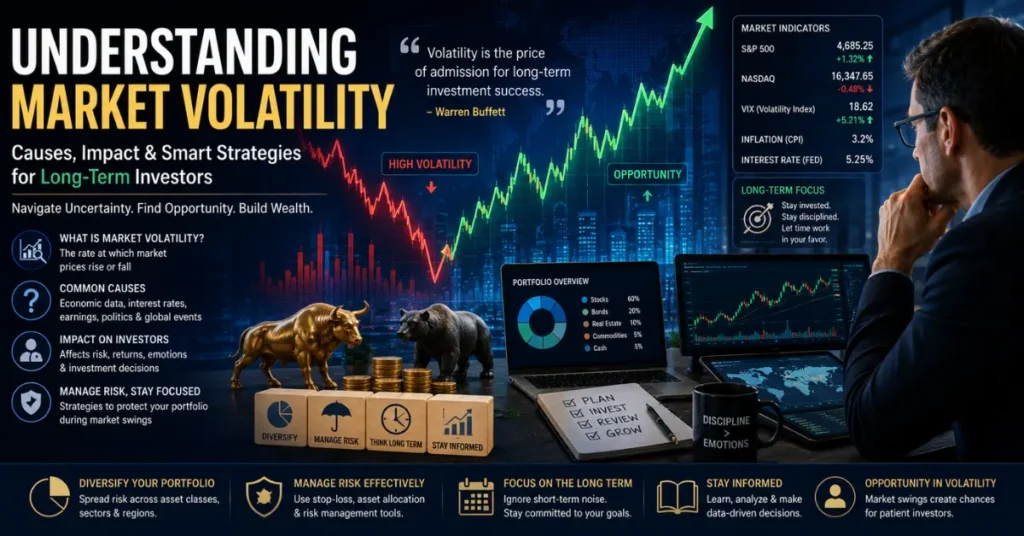
Financial markets are constantly changing, and one of the most important concepts every investor should understand is market volatility. Whether you are investing in stocks, bonds, mutual funds, cryptocurrencies, or exchange-traded funds (ETFs), market volatility can significantly impact your portfolio. While sudden price movements can be unsettling, volatility is a normal part of investing and often creates opportunities for long-term investors. Understanding what causes market volatility and how to respond to it can help investors make informed decisions rather than reacting emotionally to short-term market fluctuations.
What Is Market Volatility?
Market volatility refers to the rate at which the price of a financial asset rises or falls over a specific period. In simple terms, volatility measures how much and how quickly prices move. A highly volatile market experiences large price swings, while a low-volatility market tends to show more stable and gradual price changes.
Volatility is often viewed as a measure of risk because unpredictable price movements can affect investment returns. However, volatility itself is not necessarily negative. It can create both risks and opportunities depending on an investor’s strategy and goals.
Why Market Volatility Matters
Understanding market volatility is essential because it affects investment decisions, portfolio performance, and overall financial planning. During periods of high volatility, investors may experience significant gains or losses within a short timeframe.
Volatility can influence:
- Stock market performance
- Investment risk levels
- Portfolio diversification strategies
- Asset allocation decisions
- Retirement planning
- Trading opportunities
- Long-term wealth creation
Investors who understand volatility are better equipped to remain disciplined during market uncertainty.
Common Causes of Market Volatility
Several factors can trigger market volatility. These events often influence investor sentiment and market expectations.
Economic Data Releases
Economic indicators such as inflation rates, unemployment figures, GDP growth, and consumer spending reports can cause market fluctuations. Strong economic data may boost investor confidence, while weak data can lead to market declines.
Interest Rate Changes
Central banks play a major role in financial markets. When interest rates rise or fall, investors often adjust their portfolios. Higher interest rates can reduce corporate profits and make borrowing more expensive, while lower rates generally support economic growth.
Political Events
Elections, government policy changes, geopolitical tensions, and international conflicts can increase uncertainty in financial markets. Investors often react quickly to political developments that may impact economic growth.
Corporate Earnings Reports
Public companies release quarterly earnings reports that provide insights into financial performance. Positive earnings can drive stock prices higher, while disappointing results may trigger sharp declines.
Global Events
Unexpected events such as pandemics, natural disasters, financial crises, and major technological disruptions can create significant market volatility across global markets.
Types of Market Volatility
Historical Volatility
Historical volatility measures past price movements over a specific period. Investors use historical data to understand how an asset has behaved previously.
Implied Volatility
Implied volatility reflects market expectations about future price movements. It is commonly used in options trading and can provide insight into investor sentiment.
Short-Term Volatility
Short-term volatility refers to daily or weekly price fluctuations. Traders often focus on short-term market movements to identify trading opportunities.
Long-Term Volatility
Long-term volatility examines price changes over months or years. Long-term investors typically focus on broader market trends rather than daily fluctuations.
How Market Volatility Affects Investors
Market volatility affects investors differently depending on their investment goals, risk tolerance, and time horizon.
Impact on Short-Term Investors
Short-term traders often seek to profit from market volatility. Large price swings can create opportunities for buying and selling assets quickly.
Impact on Long-Term Investors
Long-term investors generally benefit from staying invested despite temporary market declines. Historically, major stock markets have recovered from periods of volatility and continued growing over time.
Emotional Decision-Making
One of the biggest challenges during volatile markets is controlling emotions. Fear and panic can lead investors to sell assets at low prices, while greed may encourage buying during market bubbles.
Successful investing often requires patience and discipline during periods of uncertainty.
Strategies to Manage Market Volatility
Diversify Your Portfolio
Portfolio diversification is one of the most effective ways to reduce investment risk. By spreading investments across different asset classes, sectors, and geographic regions, investors can minimize the impact of market fluctuations.
Maintain a Long-Term Perspective
Short-term market movements are often unpredictable. Investors with long-term goals should focus on their overall investment strategy rather than reacting to daily price changes.
Use Dollar-Cost Averaging
Dollar-cost averaging involves investing a fixed amount regularly regardless of market conditions. This strategy can help reduce the impact of volatility by averaging purchase prices over time.
Build an Emergency Fund
Having sufficient cash reserves can prevent investors from selling investments during market downturns to meet unexpected expenses.
Review Risk Tolerance
Understanding personal risk tolerance is crucial. Investors should choose investments that align with their financial goals and comfort level with market fluctuations.
Market Volatility and Investment Opportunities
Although volatility is often associated with risk, it can also create opportunities. Market corrections and temporary declines may allow investors to purchase quality assets at lower prices.
Many successful investors view market downturns as opportunities to build positions in fundamentally strong companies. However, careful research and risk management remain essential.
The Role of Technology in Market Volatility
Modern technology has increased the speed at which information spreads. News, social media, algorithmic trading, and artificial intelligence can influence market sentiment almost instantly.
As a result, financial markets may react more quickly to economic developments than in previous decades. Investors should be cautious about making decisions based solely on short-term headlines or market rumors.
Final Thoughts
Market volatility is an unavoidable part of investing. While sudden price swings can create uncertainty, understanding the causes and effects of volatility helps investors make smarter decisions. Rather than viewing volatility as something to fear, investors can use it as an opportunity to strengthen their investment strategies and improve long-term financial outcomes.
By maintaining a diversified portfolio, focusing on long-term goals, managing risk effectively, and avoiding emotional decision-making, investors can navigate volatile markets with greater confidence. Whether markets are rising or falling, a disciplined investment approach remains one of the most effective ways to build wealth over time.
Also read : How to Analyze Economic Indicators