
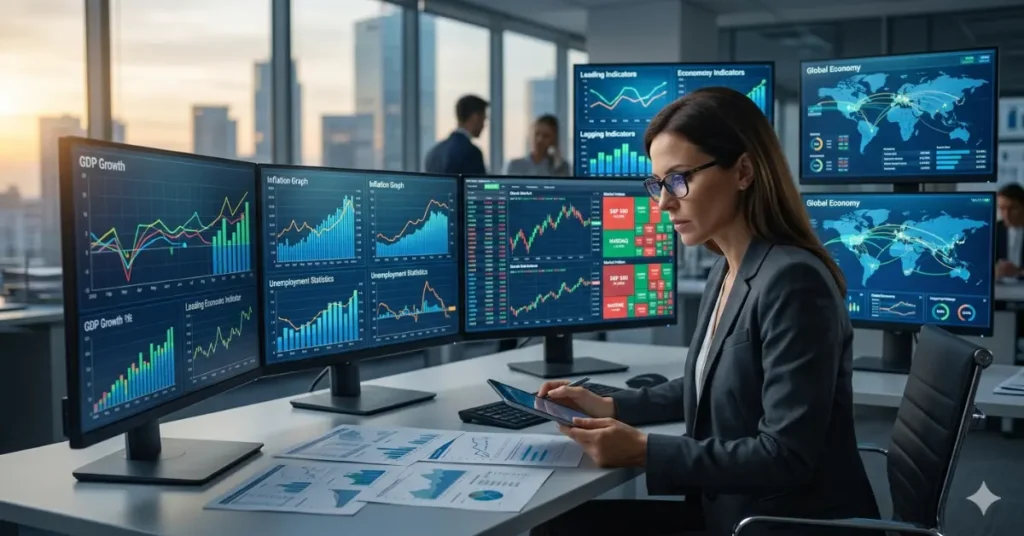
Economic indicators play a major role in understanding the health of an economy. Whether you are an investor, business owner, trader, student, or simply someone interested in financial markets, knowing how to analyze economic indicators can help you make better decisions. These indicators provide valuable insights into economic growth, inflation, employment, consumer spending, and overall market conditions. By learning how to interpret economic data correctly, you can gain a clearer picture of where the economy is heading and how it may affect your investments and financial plans.
What Are Economic Indicators?
Economic indicators are statistics and reports that provide information about the performance of an economy. Governments, central banks, and research organizations regularly publish these indicators to help businesses, investors, and policymakers understand economic trends.
Economic indicators can be classified into three main categories:
Leading Indicators
Leading indicators help predict future economic activity. They often change before the economy as a whole begins to move.
Examples include:
- Stock market performance
- Building permits
- Consumer confidence index
- Manufacturing orders
Lagging Indicators
Lagging indicators confirm trends that have already occurred.
Examples include:
- Unemployment rate
- Corporate profits
- Consumer Price Index (CPI)
Coincident Indicators
Coincident indicators move alongside the economy and reflect current economic conditions.
Examples include:
- Gross Domestic Product (GDP)
- Industrial production
- Personal income
Why Economic Indicators Matter
Economic indicators help investors and businesses make informed decisions. They can influence:
- Stock market performance
- Bond prices
- Interest rates
- Currency values
- Real estate markets
- Business investment decisions
Understanding economic indicators allows investors to identify opportunities and manage risks more effectively.
Key Economic Indicators to Analyze
Gross Domestic Product (GDP)
GDP measures the total value of goods and services produced within a country over a specific period.
GDP growth is often considered the most important measure of economic health.
What to Look For
- Rising GDP indicates economic expansion.
- Falling GDP may signal economic slowdown or recession.
- Consistent GDP growth generally supports stock market gains.
A growing economy usually leads to higher business profits and stronger consumer spending.
Inflation Rate
Inflation measures how quickly prices for goods and services are increasing.
The most commonly used inflation indicators include:
- Consumer Price Index (CPI)
- Producer Price Index (PPI)
How to Analyze Inflation
Moderate inflation is generally healthy for economic growth. However, high inflation can reduce purchasing power and increase costs for businesses.
Investors should monitor:
- Monthly CPI reports
- Core inflation rates
- Central bank inflation targets
Rising inflation often leads central banks to increase interest rates.
Employment Data
Employment statistics provide valuable information about labor market conditions.
Important employment indicators include:
- Non-Farm Payrolls (NFP)
- Unemployment Rate
- Initial Jobless Claims
Why Employment Data Matters
Strong employment growth usually indicates a healthy economy. More jobs mean more income and increased consumer spending.
Key signs to watch include:
- Declining unemployment rates
- Rising wage growth
- Increasing job creation
Weak employment figures can signal slowing economic activity.
Interest Rates
Interest rates are set by central banks to manage economic growth and inflation.
The actions of central banks such as the Federal Reserve have a significant impact on financial markets.
What Higher Interest Rates Mean
- Borrowing becomes more expensive.
- Consumer spending may slow.
- Stock markets may face pressure.
What Lower Interest Rates Mean
- Borrowing becomes cheaper.
- Businesses can expand more easily.
- Economic growth may accelerate.
Understanding interest rate trends is essential for investors.
Consumer Confidence Index
Consumer confidence measures how optimistic consumers feel about the economy.
Consumers drive a large portion of economic activity through spending.
How to Interpret Consumer Confidence
High consumer confidence often leads to:
- Increased retail spending
- Higher business revenues
- Stronger economic growth
Low confidence can lead to reduced spending and slower economic activity.
Retail Sales Data
Retail sales reports track consumer spending across various sectors.
Since consumer spending represents a significant portion of economic activity, retail sales data is closely monitored by investors.
Strong retail sales often indicate:
- Healthy consumer demand
- Economic expansion
- Strong corporate earnings
Weak sales may suggest slowing economic momentum.
Manufacturing Data
Manufacturing activity often serves as an early signal of economic trends.
Popular manufacturing indicators include:
- Purchasing Managers’ Index (PMI)
- Industrial Production
- Factory Orders
What Manufacturing Reports Reveal
A PMI reading above 50 generally indicates expansion, while a reading below 50 suggests contraction.
Growing manufacturing activity often reflects increased business investment and demand.
How Investors Use Economic Indicators
Successful investors rarely rely on a single indicator. Instead, they analyze multiple data points together.
For example:
- Strong GDP growth
- Low unemployment
- Moderate inflation
- Rising consumer confidence
Together, these factors may indicate a healthy economy and favorable investment environment.
On the other hand:
- Weak GDP growth
- Rising unemployment
- Falling retail sales
Could signal economic weakness and increased market risk.
Combining indicators helps investors build a more complete picture.
Understanding Economic Cycles
Economic indicators help identify where an economy stands within the business cycle.
Expansion
Characteristics include:
- Rising GDP
- Strong employment
- Growing consumer spending
- Higher corporate profits
Peak
The economy reaches maximum growth before slowing.
Signs include:
- High inflation
- Tight labor markets
- Rising interest rates
Contraction
Economic activity slows.
Common indicators include:
- Falling GDP
- Rising unemployment
- Weak consumer spending
Recovery
The economy begins to improve after a downturn.
Indicators often show:
- Increasing employment
- Rising production
- Growing business activity
Recognizing these phases helps investors adjust their strategies accordingly.
Common Mistakes When Analyzing Economic Indicators
Focusing on One Indicator
No single indicator tells the entire story. Always analyze multiple reports together.
Ignoring Trends
One month’s data may be misleading. Look for longer-term trends rather than reacting to a single report.
Overreacting to Headlines
Financial media often focuses on short-term surprises. Understanding the broader economic context is more important.
Forgetting Market Expectations
Markets often react to how data compares with expectations rather than the actual number itself.
A report may appear strong but still disappoint investors if expectations were even higher.
Tips for Better Economic Analysis
- Follow a regular economic calendar.
- Track major reports consistently.
- Compare current data with previous readings.
- Understand how indicators affect markets.
- Monitor central bank statements.
- Focus on long-term trends.
- Use multiple indicators for confirmation.
Building a disciplined approach to economic analysis can improve investment and business decisions over time.
Conclusion
Learning how to analyze economic indicators is an essential skill for anyone interested in finance, investing, or business. Economic reports such as GDP, inflation, employment data, retail sales, consumer confidence, and interest rates provide valuable insights into the health and direction of an economy.
Rather than focusing on a single data point, successful analysts examine multiple indicators together to understand broader economic trends. By following economic reports regularly and understanding their impact on markets, you can make more informed financial decisions, identify potential opportunities, and better prepare for changing economic conditions.
As global economies continue to evolve, the ability to interpret economic indicators will remain one of the most valuable skills for investors and business leaders alike.
Also read : Global Investing: Should You Invest Internationally?