

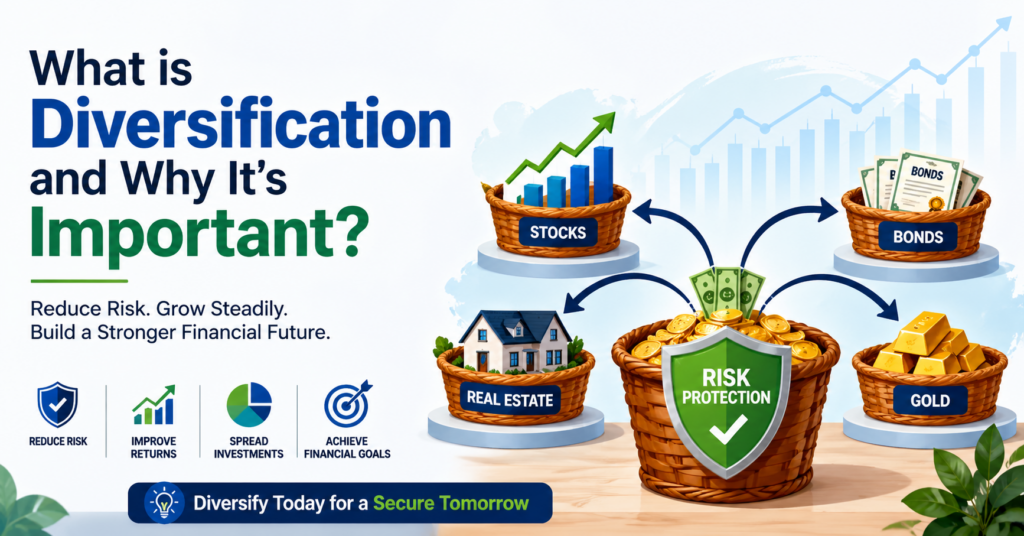
When it comes to investing, one of the biggest mistakes beginners make is putting all their money into a single asset—hoping it will grow quickly. While this might sound exciting, it can also be extremely risky. Markets are unpredictable, and even the most promising investment can suddenly lose value. This is where diversification comes in. Diversification is one of the most powerful strategies to protect your money, reduce risk, and achieve steady long-term growth. Whether you are new to investing or already have some experience, understanding diversification can help you make smarter financial decisions.
What is Diversification?
Diversification is an investment strategy where you spread your money across different types of assets, industries, or markets instead of investing everything in one place. The idea is simple: don’t put all your eggs in one basket.
For example, instead of investing all your money in one stock, you could invest in:
- Stocks from different companies
- Bonds
- Mutual funds
- Real estate
- Gold or commodities
By doing this, if one investment performs poorly, others may perform well and balance out your losses.
Why is Diversification Important?
Diversification plays a crucial role in building a strong and stable investment portfolio. Let’s break down why it matters.
1. Reduces Investment Risk
The primary benefit of diversification is risk reduction. Different assets react differently to market conditions. For instance, when the stock market falls, gold or bonds might rise. This helps protect your overall portfolio.
2. Improves Stability
A diversified portfolio tends to be more stable over time. Instead of experiencing extreme ups and downs, your returns become smoother and more predictable.
3. Protects Against Market Volatility
Markets are constantly changing due to economic events, political situations, and global factors. Diversification helps you stay protected during uncertain times.
4. Increases Long-Term Returns
While diversification may limit very high short-term gains, it often leads to better long-term performance by reducing losses and maintaining steady growth.
5. Helps Achieve Financial Goals
Whether your goal is retirement, buying a house, or building wealth, diversification helps you stay on track without taking unnecessary risks.
Types of Diversification
Diversification is not just about investing in different assets—it can be done in multiple ways.
1. Asset Class Diversification
This involves spreading investments across different asset classes such as:
- Equities (stocks)
- Fixed income (bonds)
- Real estate
- Commodities (gold, silver)
2. Sector Diversification
Investing in different industries like:
- Technology
- Healthcare
- Finance
- Energy
If one sector underperforms, others can balance it out.
3. Geographic Diversification
Investing in different countries or regions reduces the risk of relying on a single economy.
4. Time Diversification
Investing regularly over time (like SIPs) helps reduce the impact of market timing.
Example of Diversification
Let’s understand with a simple example:
Imagine you invest ₹1,00,000 in only one company’s stock. If that company faces losses, your entire investment is at risk.
Now, instead, you divide your investment like this:
- ₹40,000 in stocks
- ₹20,000 in bonds
- ₹20,000 in mutual funds
- ₹10,000 in gold
- ₹10,000 in real estate
Even if stocks perform poorly, other investments can help protect your money.
Diversification in Different Investment Options
1. Stock Market
Instead of buying shares of a single company, invest in multiple companies across different sectors.
2. Mutual Funds
Mutual funds are already diversified as they pool money into various assets. They are a great option for beginners.
3. Exchange-Traded Funds (ETFs)
ETFs track indexes and provide instant diversification at a low cost.
4. Real Estate
Investing in property adds another layer of diversification.
5. Gold and Commodities
Gold is often considered a safe investment during uncertain times.
Common Mistakes in Diversification
While diversification is important, doing it incorrectly can reduce its benefits.
1. Over-Diversification
Investing in too many assets can make your portfolio difficult to manage and reduce returns.
2. Investing in Similar Assets
Buying multiple stocks from the same sector doesn’t provide true diversification.
3. Ignoring Risk Profile
Your diversification strategy should match your risk tolerance and financial goals.
4. Lack of Regular Review
Markets change, so it’s important to review and rebalance your portfolio regularly.
How to Build a Diversified Portfolio
Here are some practical steps to create a well-diversified investment portfolio:
1. Understand Your Financial Goals
Decide what you are investing for—retirement, education, or wealth creation.
2. Assess Your Risk Tolerance
Know how much risk you can handle before choosing your investments.
3. Allocate Assets Wisely
Divide your investments among stocks, bonds, and other assets based on your goals.
4. Invest Regularly
Use strategies like SIP (Systematic Investment Plan) to invest consistently.
5. Rebalance Your Portfolio
Review your investments periodically and adjust them as needed.
Benefits of Diversification for Beginners
If you are new to investing, diversification offers several advantages:
- Reduces fear of losing money
- Makes investing safer and more manageable
- Helps you learn gradually
- Builds confidence over time
It allows beginners to participate in the market without taking high risks.
Diversification vs. Concentration
Some investors prefer concentrated investing (putting money in a few assets) for higher returns. While this can work for experienced investors, it carries high risk.
Diversification, on the other hand:
- Offers balanced growth
- Reduces losses
- Is suitable for most investors
For beginners and long-term investors, diversification is usually the safer approach.
Final Thoughts
Diversification is not just a strategy—it is a necessity in today’s unpredictable financial world. By spreading your investments across different assets, sectors, and regions, you can protect your money, reduce risk, and achieve steady growth over time.
Remember, the goal of investing is not just to earn high returns, but also to protect your capital. A well-diversified portfolio helps you do both. Start small, stay consistent, and keep learning. Over time, diversification will become one of your strongest tools for financial success.
Also read : Beginner Mistakes to Avoid in Investing