

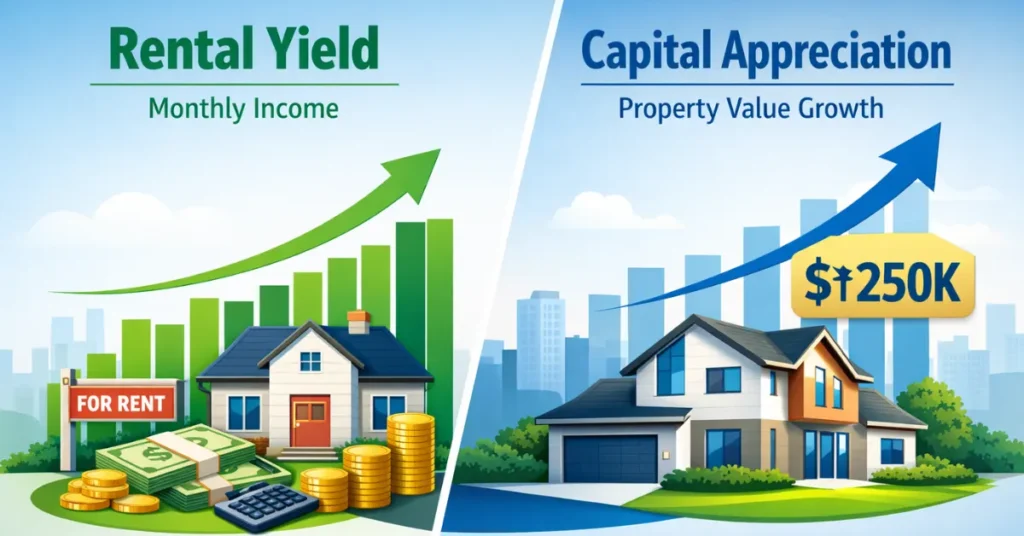
Real estate is one of the most popular ways to build long-term wealth, but not all property investments work the same way. When people talk about property returns, two terms come up again and again: rental yield and capital appreciation. Understanding these concepts helps you make smarter real estate investment decisions, compare properties, and choose strategies that match your financial goals. Whether you are a beginner investor or already own property, knowing how returns actually work can be the difference between average results and true financial growth.
In simple words, rental yield is the income you earn from renting out property, while capital appreciation is the increase in the property’s value over time. Together, they explain why investing in real estate can generate both steady cash flow and long-term wealth creation. In this article, we will explore what these terms mean, how they are calculated, what influences them, and how you can use them to improve your real estate investment strategy.
What is Rental Yield?
Rental yield is a measure of how much income you earn from a rental property compared to the property’s value or purchase price. It tells you whether your investment is profitable in terms of monthly or yearly rent.
There are two main types of rental yield:
1. Gross Rental Yield
Gross rental yield calculates the income before expenses. The formula is:
Gross Rental Yield = (Annual Rent ÷ Property Value) × 100
For example, if you buy a property for $200,000 and earn $12,000 per year in rent, the gross rental yield is 6%.
Gross yield is easy to calculate and useful for quick comparisons, but it does not include maintenance costs, taxes, vacancy periods, insurance, or property management fees.
2. Net Rental Yield
Net rental yield provides a clearer picture because it includes expenses. Its formula is:
Net Rental Yield = (Annual Rent – Annual Expenses ÷ Property Value) × 100
This helps investors understand true cash flow and real return on investment (ROI). It is especially useful for people focused on passive income from real estate.
Why Rental Yield Matters
Rental yield is crucial for anyone looking to earn regular rental income. It answers questions like:
- Is this property good for monthly cash flow?
- Will the rent cover EMIs, maintenance, and taxes?
- Is the property overpriced for the income it generates?
- How does this investment compare to other rental opportunities?
Investors looking for steady cash flow usually prefer properties with high rental yield. These are often located in areas with strong rental demand such as cities with universities, corporate hubs, and growing job markets.
Keywords to include naturally: rental income, rental return, property investment, real estate cash flow, rental market demand.
What is Capital Appreciation?
Capital appreciation refers to the increase in property value over time. When you buy a property at one price and sell it at a higher price later, the difference is capital appreciation.
For example, if you purchase a house for $150,000 and sell it for $230,000 after a few years, you have gained $80,000 from capital appreciation.
Capital appreciation is driven by:
- Location development
- Infrastructure projects
- Urban expansion
- Market demand and supply
- Inflation
- Government policies
- Economic growth
- Property improvements and renovations
Unlike rental yield, capital appreciation does not provide monthly income, but it can lead to large long-term profits.
Rental Yield vs Capital Appreciation
Both rental yield and capital appreciation are important, but they serve different investment goals.
| Aspect | Rental Yield | Capital Appreciation |
|---|---|---|
| Focus | Regular income | Long-term profit |
| Ideal For | Cash flow investors | Wealth growth |
| Depends On | Rent value, demand | Price growth, location |
| Risk Level | Lower to moderate | Moderate to higher |
Some areas offer high rental yield but low appreciation (e.g., smaller towns with strong tenant demand), while prime city locations may offer high appreciation but lower rental yield.
Smart investors look for a balance of both depending on their financial plan.
Factors Affecting Rental Yield
Rental yield depends on several real estate market factors, including:
- Property location
- Nearby employment hubs
- Type of property (apartment, villa, commercial space)
- Amenities and infrastructure
- Tenant demand and demographics
- Market rent trends
- Property management quality
Areas near IT parks, colleges, transport hubs, or business centers usually have strong rental demand and higher yields.
Factors Affecting Capital Appreciation
Capital appreciation depends heavily on future growth potential, such as:
- Metro, airport, and highway projects
- Upcoming malls, schools, and hospitals
- Rapid urbanization
- Limited land supply
- Government smart city projects
- Neighborhood upgrades
- Rising demand from buyers
Buying property in emerging locations before development is complete can lead to strong appreciation in the long run.
How to Choose Between Rental Yield and Capital Appreciation
Your choice depends on your investment goals.
Choose rental yield focused properties if you want:
- Regular passive income
- Help covering loan EMIs
- Monthly cash flow
- Lower risk, steady returns
Choose capital appreciation focused properties if you want:
- Long-term wealth creation
- Value growth over years
- Higher risk, higher reward potential
- To hold property for 7–15 years or more
Many investors create a balanced portfolio with both high-yield and high-appreciation properties.
How to Improve Rental Yield
You can increase rental yield through practical steps such as:
- Upgrading property interiors
- Adding modern amenities
- Allowing furnished rental options
- Targeting student or corporate tenants
- Using professional property management
- Setting competitive but smart rent pricing
Good maintenance also helps reduce vacancy rates, keeping rental income stable.
How to Maximize Capital Appreciation
To boost capital appreciation potential:
- Buy early in developing areas
- Research infrastructure plans
- Invest in sought-after neighborhoods
- Renovate and modernize the property
- Hold property long term
Real estate is generally considered a hedge against inflation, meaning property values tend to rise as prices increase overall.
Common Mistakes Investors Make
Some frequent real estate investment mistakes include:
- Focusing only on price, ignoring rental return
- Buying without researching location trends
- Ignoring expenses when calculating rental yield
- Expecting quick appreciation without market study
- Not considering liquidity and exit strategy
A successful investor always evaluates both rental ROI and future appreciation potential before making decisions.
Final Thoughts
Understanding rental yield and capital appreciation is essential for every real estate investor. Rental yield tells you how much income your property generates right now, while capital appreciation shows how much wealth it can build over time. Both are powerful, but each suits different financial goals.
If your aim is monthly passive income and cash flow, focus on properties with strong rental yield. If you want long-term wealth creation and property value growth, look for areas with strong capital appreciation potential. The most successful real estate investors combine both strategies and build diversified portfolios.
Before investing, always research the market, analyze property prices, check rental demand, and estimate expenses realistically. Real estate is not only about buying property — it is about making informed decisions that align with your financial future.
SEO-Friendly Keywords included naturally:
rental yield, capital appreciation, real estate investment, property value, rental income, rental return, real estate market, property appreciation, long-term investment, passive income, investment property, property portfolio, ROI in real estate, gross rental yield, net rental yield, cash flow in real estate, property valuation, real estate returns, buy-to-let property, rental property investment, real estate wealth creation.
Also read: Types of Real Estate Investments: Residential, Commercial, REITs & More