
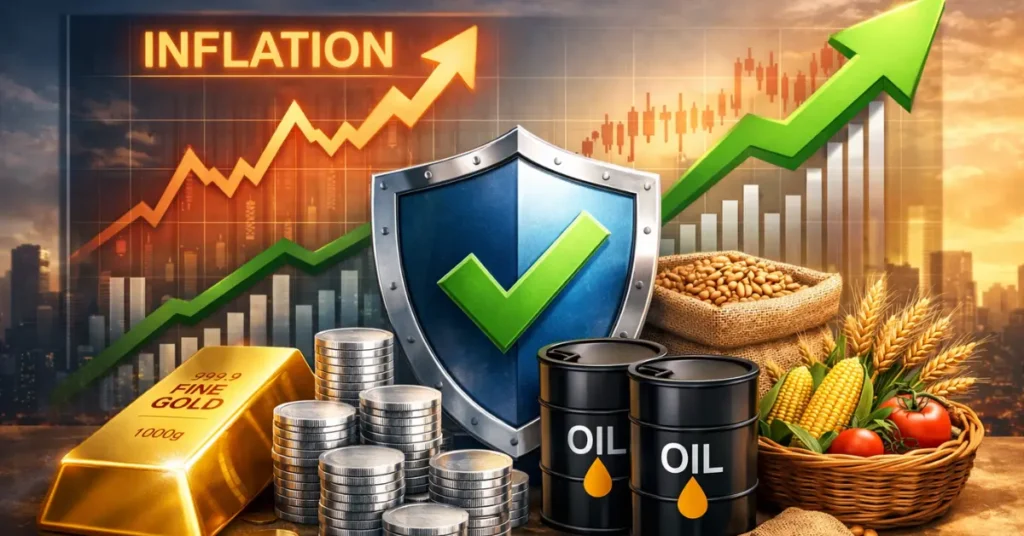
Inflation quietly eats into your money. One year your savings feel comfortable, and the next year the same amount buys less fuel, less food, and fewer essentials. This slow loss of purchasing power is one of the biggest challenges investors face today. With rising prices, market volatility, and uncertain global economies, protecting wealth has become just as important as growing it. This is where commodities come in. Often overlooked, commodities have a long history of acting as a hedge against inflation and market risks, making them a powerful tool for smart investors.
What Are Commodities?
Commodities are basic goods used in everyday life and global trade. They are usually divided into two main categories:
- Hard commodities: Natural resources like gold, silver, crude oil, natural gas, and industrial metals
- Soft commodities: Agricultural products such as wheat, corn, coffee, sugar, cotton, and livestock
Unlike stocks or bonds, commodities have intrinsic value because they are physical assets. No matter what happens in financial markets, people will always need energy, food, and raw materials. This fundamental demand makes commodities unique as an investment class.
Understanding Inflation and Market Risks
Before diving deeper, it’s important to understand why inflation and market risks matter so much.
Inflation Risk
Inflation occurs when prices rise over time, reducing the purchasing power of money. For example, if inflation is 6% per year, money sitting idle effectively loses 6% of its value annually. Traditional savings accounts often fail to keep up with inflation, especially during high-inflation periods.
Market Risk
Market risk refers to losses caused by economic downturns, geopolitical tensions, interest rate changes, or financial crises. Stock markets can fall sharply during recessions, while bonds can lose value when interest rates rise.
Investors need assets that can perform well—or at least remain stable—when traditional markets struggle. Commodities often fill this role.
Why Commodities Are Considered an Inflation Hedge
Commodities are widely seen as one of the best inflation protection tools. Here’s why:
1. Prices Rise With Inflation
When inflation increases, the cost of producing goods rises. Energy, transportation, and raw materials become more expensive. Since commodities are the raw inputs for these goods, their prices often rise along with inflation.
For example:
- Higher fuel costs push up crude oil prices
- Rising food demand increases agricultural commodity prices
- Currency devaluation boosts gold and silver prices
This direct link makes commodities a natural hedge against inflation.
2. Strong Performance During High Inflation Periods
Historically, commodities have performed well during periods of high inflation. Gold, in particular, has been a store of value for centuries. When paper currencies lose value, investors often move money into precious metals.
During inflationary cycles:
- Gold and silver often act as safe-haven assets
- Energy commodities benefit from increased demand and supply constraints
- Agricultural commodities rise due to higher production and transportation costs
3. Protection Against Currency Devaluation
Inflation is often linked with weakening currencies. When a currency loses value, commodity prices—usually priced in global markets—tend to rise. This is especially important for countries experiencing high inflation or currency depreciation.
Gold is especially effective here because it is globally accepted and not tied to any single government or central bank.
How Commodities Hedge Market Risks
Beyond inflation, commodities also help reduce overall portfolio risk.
Low Correlation With Stocks and Bonds
Commodities often move independently of stock and bond markets. When equities fall during economic uncertainty, commodities may rise due to supply disruptions or increased demand.
This low correlation helps:
- Reduce portfolio volatility
- Improve risk-adjusted returns
- Balance losses from other asset classes
Safe Haven During Economic Uncertainty
During financial crises or geopolitical tensions, investors seek assets that can preserve value. Precious metals like gold and silver are commonly seen as safe havens.
Examples include:
- Global financial crises
- War or geopolitical instability
- Banking system stress
In such times, commodity prices—especially gold—often rise as investor confidence in financial markets weakens.
Supply and Demand Dynamics
Unlike stocks, commodity prices are driven largely by real-world supply and demand. Factors such as weather conditions, natural disasters, mining output, and geopolitical events directly impact prices.
This makes commodities less dependent on corporate earnings or interest rate policies, adding another layer of diversification.
Popular Commodities for Inflation Protection
Gold
Gold is the most popular inflation hedge. It holds value over time and performs well during inflation, market crashes, and currency crises.
Silver
Silver offers both industrial demand and investment appeal. It often follows gold but can deliver higher returns during strong commodity cycles.
Crude Oil and Energy Commodities
Energy prices tend to rise with inflation since fuel costs impact almost every sector of the economy.
Agricultural Commodities
Food demand is constant. Rising population and climate challenges make agricultural commodities attractive for long-term inflation protection.
Industrial Metals
Metals like copper and aluminum benefit from infrastructure development and economic growth, making them useful during inflationary expansion phases.
Ways to Invest in Commodities
Investors can gain exposure to commodities in several ways:
1. Physical Commodities
Buying physical gold or silver is a traditional approach. However, storage and security can be challenges.
2. Commodity ETFs and Mutual Funds
Exchange-traded funds (ETFs) offer an easy and liquid way to invest in commodities without owning them physically.
3. Futures and Options
Commodity futures allow direct exposure but involve higher risk and require deeper market knowledge.
4. Commodity Stocks
Investing in mining, energy, or agricultural companies provides indirect exposure to commodity prices.
Each method has its own risk and reward profile, so diversification is key.
Risks of Investing in Commodities
While commodities offer strong inflation protection, they are not risk-free.
- Prices can be volatile in the short term
- Supply shocks may reverse quickly
- Futures markets involve leverage risks
- Commodity cycles can last for years
A balanced approach works best. Commodities should complement, not replace, traditional investments.
Role of Commodities in a Diversified Portfolio
Financial experts often recommend allocating a portion of a portfolio to commodities. Even a small allocation can significantly improve resilience during inflationary and volatile periods.
Benefits include:
- Inflation protection
- Portfolio diversification
- Reduced dependence on financial markets
- Hedge against global uncertainties
The exact allocation depends on risk tolerance, investment goals, and market conditions.
Final Thoughts
Inflation and market risks are unavoidable realities of investing. Ignoring them can slowly erode wealth, even during periods of apparent stability. Commodities offer a practical and time-tested solution to these challenges. As physical assets with real-world demand, they provide protection against rising prices, currency devaluation, and financial market volatility.
Whether through gold, energy, agriculture, or diversified commodity funds, adding commodities to your investment strategy can help safeguard purchasing power and strengthen long-term financial security. In an uncertain economic world, commodities remain one of the most effective tools for inflation protection and market risk hedging.
Also read: Commodities as an Investment Class: Basics and Benefits