
The COVID-19 pandemic changed the way the world works, lives, and does business. One of the sectors most deeply affected was commercial real estate. Offices stood empty, retail spaces struggled, and companies began questioning long-term space needs. Now, as the global economy stabilizes, the commercial real estate industry is entering a new phase of transformation. Understanding the future of commercial real estate in the post-COVID era is important for investors, developers, business owners, and policymakers who want to adapt, stay competitive, and make informed decisions in a rapidly evolving market.
How COVID-19 Changed Commercial Real Estate
Before the pandemic, commercial real estate was driven by steady office demand, growing retail spaces, and predictable leasing models. COVID-19 disrupted this balance almost overnight.
- Remote work reduced office occupancy
- Lockdowns and online shopping hit retail real estate
- Supply chain disruptions increased demand for logistics and warehousing
- Health and safety concerns reshaped building design
These shifts forced the industry to rethink traditional models. The post-COVID commercial real estate market is no longer about returning to old norms but about building flexible, future-ready spaces.
The Rise of Hybrid Work and Its Impact on Office Spaces
One of the biggest drivers of change in commercial real estate is the rise of hybrid work. Many companies now combine remote and in-office work, reducing their overall office footprint.
Key trends in office real estate:
- Smaller but more efficient office spaces
- Focus on collaboration areas instead of fixed desks
- Flexible lease terms instead of long-term commitments
- Increased demand for coworking spaces
Office buildings are being redesigned to attract employees back with better amenities, natural lighting, ventilation, and wellness-focused layouts. In the post-COVID era, office real estate is shifting from “where work happens” to “where collaboration and culture grow.”
Retail Real Estate: From Decline to Reinvention
Retail commercial real estate faced major challenges during the pandemic, but it is far from dead. Instead, it is evolving.
How retail spaces are adapting:
- Experience-based retail replacing traditional stores
- Mixed-use developments combining retail, dining, and entertainment
- Stronger focus on local communities
- Integration of online and offline shopping experiences
Shopping malls and high-street retail are being redesigned to offer more than just products. Cafes, fitness centers, pop-up stores, and events are becoming key attractions. In the future of commercial real estate, retail success will depend on customer experience, not just footfall.
Industrial and Logistics Real Estate on the Rise
While some sectors struggled, industrial and logistics real estate saw strong growth during and after COVID-19. The boom in e-commerce, last-mile delivery, and supply chain optimization has increased demand for warehouses and distribution centers.
Growth drivers include:
- Expansion of online shopping
- Need for faster delivery times
- Increased focus on local and regional supply chains
- Demand for cold storage and data-driven logistics facilities
Industrial real estate is expected to remain one of the strongest segments in the post-COVID commercial real estate market, attracting both domestic and global investors.
The Growing Importance of Flexible Commercial Spaces
Flexibility has become a core requirement across all types of commercial properties. Businesses want spaces that can adapt quickly to changing needs.
Examples of flexible commercial real estate:
- Modular office layouts
- Short-term leasing options
- Shared amenities across tenants
- Multi-purpose buildings
Developers who offer adaptable designs and flexible contracts are more likely to succeed in the future commercial real estate landscape.
Technology and Digital Transformation in Commercial Real Estate
Technology is playing a bigger role than ever in shaping commercial real estate after COVID-19. From smart buildings to data-driven decision-making, digital tools are improving efficiency and tenant experience.
Key technology trends:
- Smart building management systems
- Touchless entry and access control
- AI-driven property analytics
- Virtual property tours and digital leasing
PropTech solutions help landlords reduce costs, improve sustainability, and respond faster to market changes. In the post-COVID era, technology is no longer optional in commercial real estate—it is essential.
Sustainability and Green Buildings Take Center Stage
Sustainability has become a major focus in the future of commercial real estate. Tenants, investors, and governments are prioritizing eco-friendly buildings that reduce environmental impact.
Sustainable real estate trends include:
- Energy-efficient designs
- Use of renewable energy sources
- Water conservation systems
- Green certifications and compliance
Green commercial properties not only support environmental goals but also attract high-quality tenants and offer long-term cost savings. Sustainability is now a key factor in property valuation and investment decisions.
Changing Investor Strategies in the Post-COVID Market
Commercial real estate investors are adjusting their strategies to match the new reality. Risk assessment, diversification, and long-term resilience are more important than short-term returns.
Investor focus areas:
- Diversified property portfolios
- Strong tenant demand sectors like logistics and healthcare
- Flexible and mixed-use developments
- Data-driven market analysis
The post-COVID commercial real estate market rewards investors who are adaptable, informed, and forward-thinking.
The Role of Mixed-Use Developments
Mixed-use developments are becoming increasingly popular in the post-COVID era. These projects combine offices, residential units, retail, and entertainment in one location.
Benefits of mixed-use commercial real estate:
- Reduced dependency on a single income source
- Better land utilization
- Increased foot traffic and community engagement
- Higher long-term value
Cities and developers see mixed-use properties as a sustainable solution for urban growth and changing lifestyle needs.
Challenges Facing Commercial Real Estate Going Forward
Despite positive trends, the future of commercial real estate also comes with challenges.
Some key concerns include:
- Uncertain long-term office demand
- Rising construction and financing costs
- Regulatory changes and compliance requirements
- Economic slowdowns and interest rate fluctuations
Addressing these challenges requires innovation, collaboration, and a deep understanding of market dynamics.
What the Future Holds for Commercial Real Estate
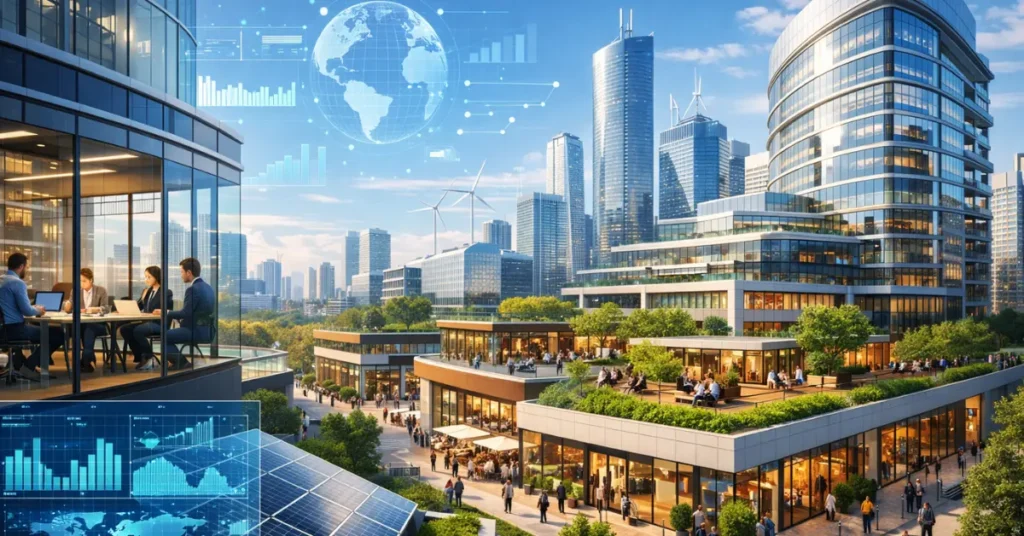
The post-COVID era marks a turning point for commercial real estate. The industry is moving toward flexibility, sustainability, and technology-driven solutions. Properties that prioritize user experience, adaptability, and environmental responsibility will lead the market.
Commercial real estate is no longer just about physical space—it is about creating environments that support modern work, lifestyle, and business needs.
Conclusion
The future of commercial real estate in the post-COVID era is shaped by change, resilience, and opportunity. While the pandemic disrupted traditional models, it also opened the door for innovation across offices, retail, industrial, and mixed-use developments. Businesses, investors, and developers who embrace flexibility, technology, and sustainability will be best positioned for long-term success.
As the world continues to adjust to new ways of working and living, commercial real estate will remain a critical part of economic growth—redefined, reimagined, and ready for the futur
Also read: Top Cities for Real Estate Investment in India and Abroad