

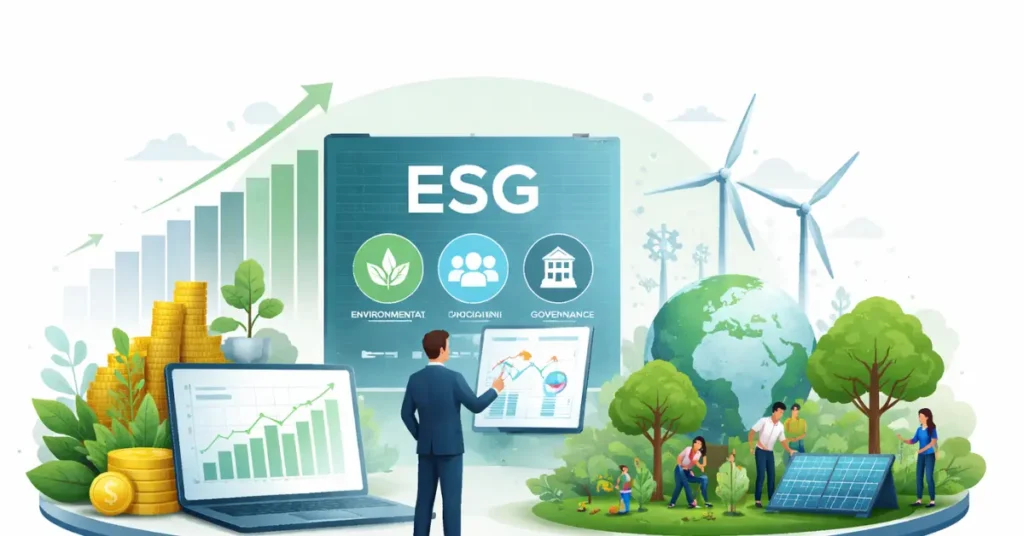
In today’s rapidly changing world, investors are no longer focused only on financial returns. They are also asking an important question: Can my investments make a positive difference? This shift in mindset has given rise to ESG and impact investing—two powerful approaches that aim to align profit with purpose. As climate change, social inequality, and corporate governance issues continue to dominate global discussions, these investment strategies are becoming essential for both individuals and institutions.
Whether you are a beginner in the financial world or a seasoned investor, understanding ESG (Environmental, Social, and Governance) and impact investing can help you make smarter, more responsible decisions while still achieving strong financial returns.
What is ESG Investing?
ESG investing refers to the practice of evaluating companies based on three key factors:
1. Environmental
This focuses on how a company impacts the planet. It includes:
- Carbon emissions and climate change policies
- Energy efficiency and renewable energy use
- Waste management and pollution control
2. Social
This examines how a company manages relationships with employees, suppliers, customers, and communities:
- Employee welfare and diversity
- Human rights practices
- Customer satisfaction and data privacy
3. Governance
This relates to how a company is run:
- Board structure and transparency
- Executive compensation
- Ethical business practices
Investors use ESG criteria to identify companies that are not only financially sound but also responsible and sustainable.
What is Impact Investing?
Impact investing goes a step further than ESG investing. While ESG focuses on avoiding harm and improving practices, impact investing actively seeks to generate measurable social or environmental benefits alongside financial returns.
Examples of impact investments include:
- Funding renewable energy projects
- Investing in affordable housing
- Supporting education and healthcare initiatives
- Backing startups focused on social innovation
In simple terms, ESG is about how companies operate, while impact investing is about what outcomes investments create.
Why ESG and Impact Investing Matter Today
1. Growing Awareness of Global Challenges
Issues like climate change, water scarcity, and income inequality are no longer distant concerns. Investors are realizing that these problems can directly impact financial markets and long-term returns.
2. Changing Investor Preferences
Millennials and Gen Z investors are particularly interested in sustainable investing. They want their money to reflect their values, leading to increased demand for ESG funds and impact-driven portfolios.
3. Better Risk Management
Companies with strong ESG practices are often better at managing risks. For example, a company that focuses on environmental sustainability is less likely to face regulatory penalties or reputational damage.
4. Long-Term Financial Performance
Studies have shown that companies with strong ESG performance often deliver stable and competitive returns over time. Sustainable businesses are more adaptable and resilient in uncertain markets.
Key Benefits of ESG and Impact Investing
1. Aligning Investments with Personal Values
Investors can support causes they care about, such as clean energy, gender equality, or ethical business practices.
2. Portfolio Diversification
ESG and impact investments provide opportunities across different sectors, including technology, healthcare, and renewable energy.
3. Positive Social and Environmental Impact
Your investment can contribute to real-world improvements, such as reducing carbon emissions or improving access to education.
4. Enhanced Brand Reputation
For institutional investors and companies, adopting ESG principles improves credibility and trust among stakeholders.
Popular ESG and Impact Investment Strategies
1. Negative Screening
Avoid investing in industries like tobacco, fossil fuels, or weapons.
2. Positive Screening
Select companies with strong ESG performance compared to peers.
3. Thematic Investing
Focus on specific themes such as clean energy, water conservation, or social equality.
4. Shareholder Engagement
Investors actively engage with companies to improve ESG practices.
5. Community Investing
Direct funds into underserved communities to promote development and growth.
ESG Investing vs Traditional Investing
| Aspect | ESG Investing | Traditional Investing |
|---|---|---|
| Focus | Financial + Ethical | Financial only |
| Risk | Lower long-term risk | Higher exposure to ESG risks |
| Returns | Competitive returns | Varies |
| Impact | Positive social/environmental impact | Limited or none |
Challenges of ESG and Impact Investing
While ESG and impact investing offer many benefits, they also come with challenges:
1. Lack of Standardization
There is no universal ESG rating system, which can make comparisons difficult.
2. Greenwashing
Some companies falsely claim to be environmentally friendly to attract investors.
3. Limited Data Transparency
Reliable ESG data is still evolving, making it harder to evaluate companies accurately.
4. Measuring Impact
In impact investing, quantifying social or environmental outcomes can be complex.
How to Start ESG and Impact Investing
1. Define Your Goals
Decide whether you want to focus on financial returns, social impact, or both.
2. Research ESG Funds
Look for mutual funds or ETFs that follow ESG criteria.
3. Check ESG Ratings
Use ESG scores from trusted sources to evaluate companies.
4. Diversify Your Portfolio
Spread your investments across sectors and geographies.
5. Monitor Performance
Regularly review both financial returns and impact outcomes.
ESG Investing in India
India is witnessing rapid growth in ESG and sustainable investing. With increasing government initiatives, such as renewable energy targets and ESG disclosure requirements, companies are becoming more accountable.
Indian investors are also showing interest in:
- ESG mutual funds
- Green bonds
- Social impact startups
This trend is expected to grow as awareness increases and regulatory frameworks become stronger.
Future of ESG and Impact Investing
The future of ESG and impact investing looks promising. Here are some key trends:
1. Integration into Mainstream Investing
ESG factors are becoming a standard part of investment analysis.
2. Technological Advancements
AI and data analytics are improving ESG reporting and transparency.
3. Stronger Regulations
Governments worldwide are introducing policies to ensure accountability and prevent greenwashing.
4. Increased Capital Flow
More institutional investors are allocating funds toward sustainable investments.
Conclusion
ESG and impact investing are transforming the financial landscape by proving that profit and purpose can go hand in hand. Investors today have the opportunity to generate strong returns while contributing to a better world. By focusing on environmental sustainability, social responsibility, and ethical governance, these investment strategies are shaping a more resilient and inclusive future.
If you are looking to make smarter investment decisions that align with your values, ESG and impact investing offer a powerful path forward. As awareness continues to grow, these approaches will play a crucial role in building a sustainable global economy.
Also read : Private Credit: The New Frontier in Yield Generation