

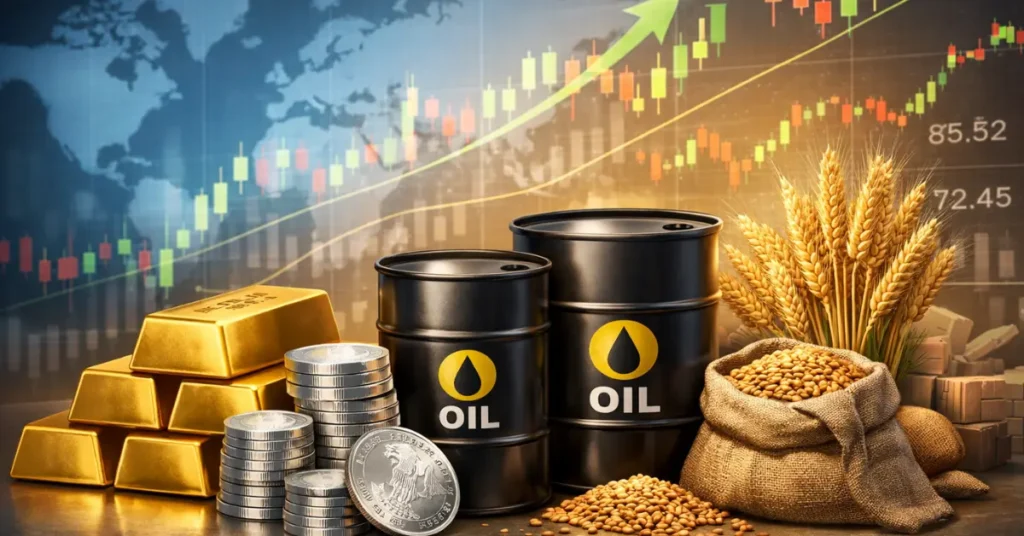
Commodities are a powerful yet often overlooked investment option in a world where stock markets fluctuate rapidly and currencies lose value over time. From gold and silver to crude oil and agricultural products, commodities play a vital role in the global economy and offer unique advantages to investors. Understanding how commodities function as an investment class can help you build a stronger, more balanced portfolio while reducing long-term risk.
In this guide, we will explore the basics of commodities, the different types, how to invest in them, and the key benefits they offer. Whether you are a beginner or an experienced investor, this article will help you see why commodities deserve a place in your investment strategy.
What Are Commodities?
Commodities are basic goods used in commerce that are interchangeable with other goods of the same type. These are raw materials or primary products that form the foundation of many industries. Common examples include gold, silver, crude oil, natural gas, wheat, corn, coffee, and cotton.
Unlike stocks or bonds, commodities are physical assets. Their value is mainly driven by supply and demand, global economic conditions, weather patterns, geopolitical events, and currency movements. Because of this, commodities often behave differently from traditional financial assets.
Types of Commodities
Commodities are generally divided into four main categories:
1. Precious Metals
This group includes gold, silver, platinum, and palladium. Precious metals are widely used as a store of value and a hedge against inflation and currency weakness. Gold investment is especially popular during times of economic uncertainty.
2. Energy Commodities
These include crude oil, natural gas, gasoline, and heating oil. Energy commodities are closely linked to global growth, industrial demand, and geopolitical developments.
3. Agricultural Commodities
Wheat, rice, corn, sugar, soybeans, coffee, and cocoa fall into this category. Prices are influenced by weather conditions, crop yields, population growth, and export policies.
4. Industrial Metals
Copper, aluminum, zinc, and nickel are widely used in construction, manufacturing, and infrastructure. Their demand rises with economic expansion and industrial activity.
Why Invest in Commodities?
Commodities offer several advantages that make them an attractive investment class. Let’s look at the main benefits.
1. Portfolio Diversification
One of the biggest benefits of investing in commodities is diversification. Commodities often have a low or negative correlation with stocks and bonds. This means when stock markets fall, commodity prices may remain stable or even rise.
By adding commodities to your investment portfolio, you can reduce overall risk and improve long-term stability. Diversification helps smooth returns and protect your capital during market downturns.
2. Hedge Against Inflation
Inflation reduces the purchasing power of money over time. Commodities, especially gold and energy, tend to perform well during periods of high inflation.
When prices of goods and services rise, the value of raw materials usually increases too. This makes commodities a natural hedge against inflation and currency depreciation.
3. Protection During Economic Uncertainty
During financial crises, geopolitical tensions, or currency volatility, investors often move their money into safe-haven assets like gold and silver. Precious metals help preserve wealth when traditional markets become unstable.
Commodities can act as a defensive investment during uncertain times, protecting your portfolio from major losses.
4. Exposure to Global Growth
As the global economy grows, the demand for energy, metals, and agricultural products increases. This creates long-term opportunities for commodity investors.
Emerging markets, urbanization, infrastructure projects, and population growth all drive higher demand for raw materials, supporting commodity prices over time.
How to Invest in Commodities
There are several ways to invest in commodities, depending on your risk appetite, capital, and experience level.
1. Physical Commodities
You can directly buy physical assets such as gold coins, silver bars, or agricultural products. This method offers direct ownership but involves storage, insurance, and security costs.
Physical gold investment is popular among long-term investors seeking wealth preservation.
2. Commodity Futures
Commodity futures are contracts to buy or sell a specific quantity of a commodity at a fixed price on a future date. Futures trading offers high leverage and profit potential but also carries high risk.
This method is more suitable for experienced traders who understand market movements and risk management.
3. Commodity ETFs and Mutual Funds
Commodity exchange-traded funds (ETFs) and mutual funds allow you to invest in commodities without owning them physically. These funds track the price of a specific commodity or a basket of commodities.
Commodity ETFs are popular among retail investors because they are easy to trade, liquid, and cost-effective.
4. Commodity Stocks
You can invest in companies involved in mining, energy production, or agriculture. Examples include gold mining companies, oil producers, and fertilizer manufacturers.
Commodity stocks offer indirect exposure and may provide dividends, but their prices are also affected by company performance and stock market trends.
Risks of Investing in Commodities
While commodities offer many benefits, they also come with certain risks that investors should understand.
Price Volatility
Commodity prices can be highly volatile due to weather changes, political events, supply disruptions, and currency fluctuations. Sudden price movements can lead to significant gains or losses.
Lack of Regular Income
Unlike stocks and bonds, most commodities do not generate regular income such as dividends or interest. Returns mainly depend on price appreciation.
Storage and Holding Costs
Physical commodities require storage, insurance, and transportation, which can reduce overall returns.
Market Complexity
Commodity markets are influenced by many global factors. Understanding supply chains, seasonal cycles, and geopolitical risks requires careful research and monitoring.
Best Commodities for Long-Term Investment
Some commodities are better suited for long-term investors due to their stability and demand patterns.
Gold
Gold remains the most popular commodity investment. It acts as a hedge against inflation, currency risk, and economic crises. Long-term investors often include gold as a core portfolio asset.
Silver
Silver offers both industrial and investment demand. It is used in electronics, solar panels, and medical devices, giving it strong growth potential.
Crude Oil
Energy demand continues to grow with industrialization and transportation needs. While volatile, oil remains a key driver of the global economy.
Agricultural Commodities
With rising global population and food demand, agricultural commodities offer long-term growth opportunities, especially in emerging markets.
How Much Should You Allocate to Commodities?
Financial experts usually recommend allocating 5% to 15% of your portfolio to commodities, depending on your risk tolerance and investment goals. Commodities should be used as a supporting asset class, not the main focus.
A balanced mix of stocks, bonds, real estate, and commodities can help you achieve steady growth and risk protection.
Key Tips for Commodity Investing
- Start with small allocations and increase gradually
- Focus on diversification across different commodities
- Use ETFs and funds if you are a beginner
- Monitor global economic trends and inflation data
- Avoid overtrading and excessive leverage
Long-term discipline and proper risk management are essential for success in commodity investing.
Final Thoughts
Commodities as an investment class offer powerful benefits that many investors overlook. They provide diversification, inflation protection, and stability during economic uncertainty. With rising global demand and changing economic cycles, commodities remain a valuable tool for building a resilient investment portfolio.
By understanding the basics of commodities, the different investment methods, and the associated risks, you can make informed decisions and strengthen your long-term financial strategy. Whether you choose gold, energy, or agricultural products, commodities can play an important role in securing your financial future.
If you are looking to balance risk, protect wealth, and benefit from global growth, commodities deserve a serious place in your investment plan.
Also read: How to Invest in Gold, Silver & Precious Metals the Smart Way