

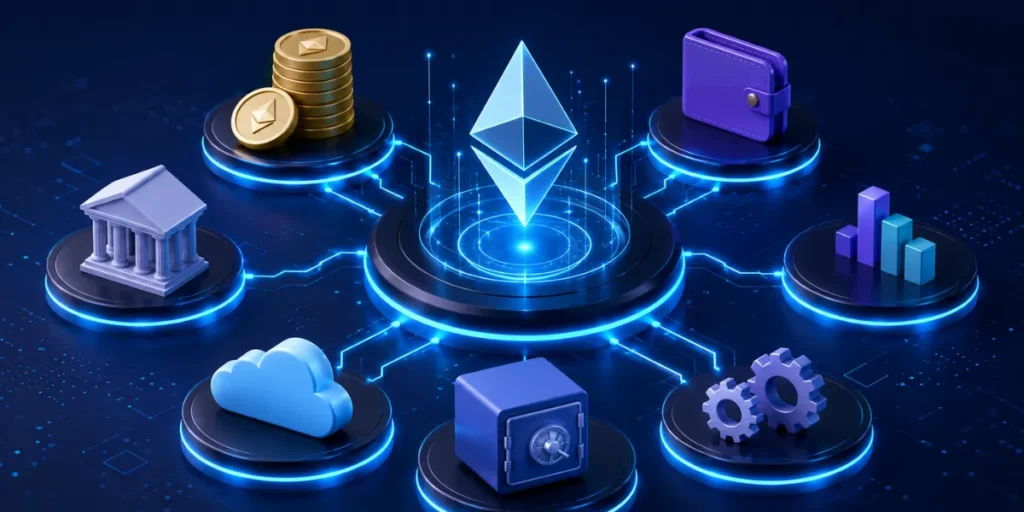
The world of finance is changing faster than ever, and one of the biggest innovations driving this transformation is Decentralized Finance (DeFi). Instead of relying on banks, financial institutions, or brokers, DeFi allows people to borrow, lend, trade, invest, and earn interest directly through blockchain technology. With just an internet connection and a crypto wallet, anyone can access financial services without needing approval from a central authority.
As cryptocurrencies like Bitcoin and Ethereum continue to gain mainstream attention, DeFi has become one of the most talked-about sectors in the blockchain industry. It offers users greater control over their money, increased transparency, and access to global financial services. Whether you’re new to crypto or looking to understand how decentralized finance works, this guide explains everything you need to know about DeFi in simple English.
What is DeFi (Decentralized Finance)?
Decentralized Finance (DeFi) is a blockchain-based financial system that provides traditional financial services without banks or other centralized institutions.
Instead of depending on a bank to process transactions or approve loans, DeFi uses smart contracts—self-executing programs stored on a blockchain—to automate financial activities.
Most DeFi applications are built on the Ethereum blockchain, although networks like BNB Chain, Solana, Avalanche, Polygon, Arbitrum, and Base also support a growing DeFi ecosystem.
In simple terms, DeFi allows people to:
- Send and receive money
- Borrow cryptocurrencies
- Lend digital assets
- Earn interest
- Trade tokens
- Invest in decentralized applications
- Access financial products without intermediaries
How Does DeFi Work?
DeFi runs on blockchain technology, where transactions are recorded on a public ledger that anyone can verify.
The core technology behind DeFi is smart contracts.
A smart contract automatically performs an action when certain conditions are met. For example:
- A lender deposits cryptocurrency into a lending platform.
- A borrower provides collateral.
- The smart contract releases the loan automatically.
- Interest payments are distributed without human involvement.
This eliminates the need for banks, brokers, or financial institutions to manage the process.
Key Features of DeFi
1. Decentralization
No single company or government controls DeFi platforms. Transactions happen on distributed blockchain networks.
2. Transparency
Every transaction is recorded on the blockchain and can be publicly verified.
3. Permissionless Access
Anyone with an internet connection and a crypto wallet can use DeFi services without opening a bank account.
4. Non-Custodial
Users keep full control of their crypto assets instead of handing them over to a financial institution.
5. Global Availability
People from almost anywhere in the world can access DeFi applications 24/7.
Main Components of DeFi
Decentralized Exchanges (DEXs)
DEXs allow users to trade cryptocurrencies directly without centralized exchanges.
Popular examples include:
- Uniswap
- PancakeSwap
- Curve Finance
- SushiSwap
These platforms use liquidity pools instead of traditional order books.
Lending and Borrowing Platforms
Users can lend cryptocurrencies and earn interest or borrow crypto by providing collateral.
Popular lending protocols include:
- Aave
- Compound
- Spark Protocol
Stablecoins
Stablecoins are cryptocurrencies designed to maintain a stable value by being linked to assets like the U.S. dollar.
Examples include:
- USDT
- USDC
- DAI
Stablecoins reduce the volatility commonly associated with cryptocurrencies.
Yield Farming
Yield farming allows users to earn rewards by providing liquidity to DeFi platforms.
Investors deposit tokens into liquidity pools and receive rewards in return.
Liquidity Pools
Liquidity pools contain cryptocurrency deposited by users to facilitate trading on decentralized exchanges.
Liquidity providers earn a share of transaction fees.
Staking
Staking allows crypto holders to lock their assets and earn passive income while helping secure blockchain networks.
Benefits of DeFi
Financial Freedom
Users control their own assets without depending on banks.
Lower Fees
Removing intermediaries often reduces transaction costs.
Fast Transactions
Blockchain transactions are processed much faster than many traditional banking systems.
Accessibility
People without access to traditional banking services can participate in the global financial system.
Transparency
Public blockchains allow anyone to verify transactions.
Passive Income Opportunities
Users can earn rewards through:
- Lending
- Staking
- Yield farming
- Liquidity mining
Risks of DeFi
Although DeFi offers many advantages, it also comes with risks.
Smart Contract Bugs
Errors in smart contract code can result in financial losses.
Market Volatility
Cryptocurrency prices can fluctuate dramatically.
Impermanent Loss
Liquidity providers may experience losses when token prices change significantly.
Scams and Fraud
Fake DeFi projects and rug pulls continue to target inexperienced investors.
Regulatory Uncertainty
Governments worldwide are still developing regulations for decentralized finance.
Popular DeFi Use Cases
DeFi has expanded into many financial services.
Crypto Lending
Earn interest by lending cryptocurrencies.
Crypto Borrowing
Borrow digital assets without selling existing holdings.
Decentralized Trading
Trade cryptocurrencies without centralized exchanges.
Insurance
Blockchain-based insurance platforms protect against smart contract risks.
Asset Management
Users can manage diversified crypto portfolios through decentralized protocols.
Payments
Send money internationally without banks or expensive transfer services.
DeFi vs Traditional Finance
| Feature | DeFi | Traditional Finance |
|---|---|---|
| Control | User | Banks |
| Availability | 24/7 | Business Hours |
| Intermediaries | None | Multiple |
| Transparency | Public Blockchain | Limited |
| Accessibility | Global | Region Dependent |
| Speed | Minutes | Hours or Days |
| Fees | Usually Lower | Often Higher |
Popular DeFi Platforms
Some of the most widely used decentralized finance platforms include:
- Uniswap
- Aave
- Compound
- MakerDAO
- Curve Finance
- PancakeSwap
- Lido Finance
- Yearn Finance
- Balancer
- Spark Protocol
Each platform focuses on different financial services, including trading, lending, staking, or liquidity management.
Why DeFi Matters
DeFi is changing how people think about money and financial services.
Instead of relying on banks, users can access financial tools directly through blockchain networks. This creates opportunities for individuals in regions where traditional banking services are limited or expensive.
DeFi also promotes innovation by allowing developers to build open financial applications that anyone can use.
As blockchain adoption continues to grow, decentralized finance is expected to play an increasingly important role in the future of digital payments, investments, and global financial inclusion.
Challenges Facing DeFi
Despite rapid growth, DeFi still faces several challenges:
- Security vulnerabilities
- Complex user experience for beginners
- High transaction fees on some blockchains
- Scalability limitations
- Regulatory compliance
- Lack of consumer protection
Solving these issues will be essential for wider adoption.
Is DeFi Safe?
DeFi can be safe when users choose reputable platforms and follow good security practices. However, it is not risk-free.
Before investing, users should:
- Research the platform thoroughly.
- Verify smart contract audits.
- Use trusted crypto wallets.
- Enable strong security measures.
- Never invest more than they can afford to lose.
- Beware of phishing websites and scams.
The Future of Decentralized Finance
The future of DeFi looks promising as blockchain technology continues to evolve. New innovations in scalability, cross-chain interoperability, and decentralized identity are making DeFi more efficient and user-friendly. Institutional interest is also growing, with many companies exploring blockchain-based financial services. As regulations become clearer and security improves, DeFi has the potential to reshape the global financial system by making financial services more accessible, transparent, and inclusive.
Conclusion
Decentralized Finance (DeFi) is revolutionizing the way people access financial services by removing traditional intermediaries and replacing them with blockchain-powered smart contracts. From lending and borrowing to trading and earning passive income, DeFi offers countless opportunities for individuals seeking greater financial freedom and transparency.
While the technology comes with risks such as smart contract vulnerabilities, scams, and market volatility, its long-term potential remains significant. As blockchain adoption continues to increase worldwide, DeFi is likely to become a key part of the future digital economy. Understanding how decentralized finance works today can help you make informed decisions as this rapidly evolving ecosystem continues to grow.
Also read : Risks of Crypto Investing: What Every Investor Should Know Before Buying Cryptocurrency