

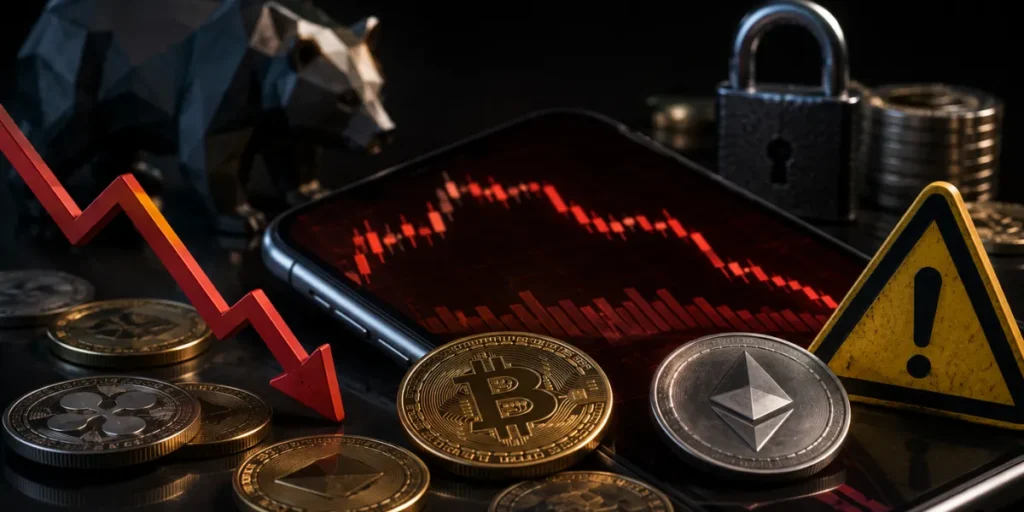
Cryptocurrency has transformed the financial world by offering a new way to invest, transfer money, and build digital wealth. Bitcoin, Ethereum, and thousands of other cryptocurrencies have attracted millions of investors with stories of massive returns and groundbreaking technology. However, while the potential rewards can be exciting, crypto investing also comes with significant risks that every investor should understand before putting money into the market.
Many beginners enter the cryptocurrency market after hearing success stories on social media or seeing prices rise rapidly. Unfortunately, they often overlook the risks involved. Unlike traditional investments, cryptocurrencies are highly volatile, largely unregulated in many countries, and vulnerable to hacking, scams, and market manipulation. Understanding these risks can help investors make smarter decisions and avoid costly mistakes.
In this guide, we’ll explore the biggest risks of crypto investing, why they matter, and practical ways to protect your investments.
What Is Crypto Investing?
Crypto investing refers to buying digital assets such as Bitcoin, Ethereum, Solana, XRP, or other cryptocurrencies with the expectation that their value will increase over time. Investors can purchase cryptocurrencies through crypto exchanges, trading platforms, or investment apps.
While cryptocurrencies offer exciting opportunities, they remain one of the most unpredictable asset classes available today.
Why Understanding Crypto Investment Risks Is Important
Every investment carries some level of risk, but cryptocurrency investments often experience much larger price swings than stocks, bonds, or mutual funds.
Knowing the risks helps investors:
- Make informed investment decisions
- Reduce emotional trading
- Avoid common crypto scams
- Protect their digital assets
- Build a long-term investment strategy
1. High Market Volatility
The biggest risk of crypto investing is extreme price volatility.
Cryptocurrency prices can rise or fall dramatically within hours. A coin that gains 30% in one day may lose 40% the following week.
Factors affecting crypto prices include:
- Market sentiment
- Global economic conditions
- Government regulations
- Social media influence
- Large investor activity (whales)
- Exchange listings or delistings
This volatility can create opportunities but also lead to significant losses.
2. Regulatory Uncertainty
Governments around the world continue to develop cryptocurrency regulations.
Some countries encourage crypto innovation, while others impose restrictions or outright bans. Changes in regulations can affect cryptocurrency prices almost instantly.
Possible regulatory risks include:
- Higher taxes
- Trading restrictions
- Exchange regulations
- Stablecoin rules
- Licensing requirements
- Bans on certain crypto services
Investors should stay informed about regulatory developments in their country.
3. Cybersecurity Risks
Unlike traditional bank accounts, cryptocurrency investments are entirely digital.
Hackers constantly target:
- Crypto exchanges
- Digital wallets
- DeFi platforms
- NFT marketplaces
Security threats include:
- Exchange hacks
- Wallet theft
- Malware attacks
- SIM swap attacks
- Phishing emails
- Fake crypto apps
Using hardware wallets, strong passwords, and two-factor authentication can significantly improve security.
4. Crypto Scams and Fraud
The cryptocurrency industry has unfortunately attracted scammers due to its decentralized nature.
Common crypto scams include:
- Fake investment platforms
- Ponzi schemes
- Rug pulls
- Fake token launches
- Giveaway scams
- Romance crypto scams
- Impersonation scams
Always research projects thoroughly before investing.
5. Lack of Consumer Protection
Traditional financial institutions often provide insurance or legal protection.
Cryptocurrency usually does not.
If you accidentally send crypto to the wrong wallet address, the transaction cannot usually be reversed.
Similarly, if an exchange fails or closes, recovering funds may be difficult.
6. Project Failure Risk
Thousands of cryptocurrency projects launch every year.
Many fail because of:
- Poor development
- Weak business models
- Lack of funding
- Security problems
- Low community adoption
Investing in unknown cryptocurrencies carries much higher risks than established digital assets.
7. Liquidity Risk
Some cryptocurrencies have low trading volume.
Low liquidity means investors may struggle to sell their holdings quickly without affecting the market price.
This is especially common with:
- New tokens
- Meme coins
- Small-cap cryptocurrencies
Liquidity risk increases during market downturns.
8. Emotional Investing
Fear and greed drive many crypto investment decisions.
Common emotional mistakes include:
- Buying after huge price increases
- Panic selling during crashes
- Following influencers blindly
- Investing based on hype
Successful investors rely on research rather than emotions.
9. Technology Risks
Blockchain technology is constantly evolving.
Risks include:
- Smart contract bugs
- Network failures
- Software vulnerabilities
- Blockchain forks
- Technical upgrades causing disruptions
Even well-known blockchain networks can experience technical issues.
10. Market Manipulation
Cryptocurrency markets are generally less regulated than traditional financial markets.
This creates opportunities for manipulation through:
- Pump-and-dump schemes
- Wash trading
- Whale transactions
- Fake trading volume
Small investors should be cautious when investing in low-volume cryptocurrencies.
11. Stablecoin Risks
Although stablecoins are designed to maintain a fixed value, they are not completely risk-free.
Potential risks include:
- Reserve management issues
- Regulatory changes
- Loss of price peg
- Counterparty risk
Investors should understand how each stablecoin is backed before using it.
12. Private Key Loss
Your private key controls access to your cryptocurrency.
If you lose:
- Recovery phrase
- Wallet password
- Private key
Your crypto assets may become permanently inaccessible.
Secure backups are essential.
13. Inflation and Token Supply
Not all cryptocurrencies have limited supply like Bitcoin.
Some tokens continuously issue new coins, increasing inflation and potentially reducing long-term value.
Understanding tokenomics helps investors evaluate future investment potential.
14. Environmental Concerns
Some cryptocurrencies require significant energy consumption for mining.
Environmental concerns can influence:
- Government regulations
- Institutional investment
- Public opinion
Although many blockchains now use energy-efficient consensus mechanisms, sustainability remains an important topic.
15. Tax Risks
Many investors overlook cryptocurrency taxation.
Depending on your country, taxable events may include:
- Selling crypto
- Trading one crypto for another
- Staking rewards
- Mining income
- NFT sales
Maintaining accurate records can simplify tax reporting.
How to Reduce Crypto Investment Risks
Although risks cannot be eliminated, investors can reduce exposure by following good practices.
Diversify Your Portfolio
Avoid investing all your money in a single cryptocurrency.
Diversification spreads risk across multiple assets.
Invest Only What You Can Afford to Lose
Cryptocurrency remains a high-risk investment.
Never invest money needed for rent, bills, or emergencies.
Research Every Project
Study:
- Whitepaper
- Development team
- Community
- Tokenomics
- Roadmap
- Real-world use case
Never invest based solely on social media hype.
Use Secure Wallets
Store long-term investments in reputable hardware wallets instead of leaving funds on exchanges.
Enable Security Features
Always use:
- Two-factor authentication (2FA)
- Strong passwords
- Anti-phishing protection
- Secure email accounts
Avoid FOMO
Fear of Missing Out causes poor investment decisions.
Stick to your investment strategy instead of chasing sudden price rallies.
Common Crypto Investment Mistakes
Many beginners repeat the same errors:
- Investing without research
- Buying during market hype
- Ignoring security
- Falling for scams
- Trading emotionally
- Overusing leverage
- Forgetting taxes
- Holding risky coins without diversification
Learning from these mistakes can improve long-term investment success.
Is Crypto Investing Too Risky?
Cryptocurrency investing is not necessarily too risky—but it is riskier than many traditional investments.
For investors who understand blockchain technology, manage risk carefully, and maintain a long-term perspective, crypto can become part of a diversified investment portfolio.
However, anyone seeking guaranteed returns or quick profits should approach the market with caution.
Final Thoughts
The cryptocurrency market continues to evolve rapidly, offering both exciting opportunities and significant risks. Price volatility, regulatory uncertainty, cybersecurity threats, scams, project failures, and market manipulation are all important factors that investors should understand before entering the market.
The best way to succeed in crypto investing is through education, careful research, disciplined investing, and strong security practices. Rather than chasing quick profits, focus on building knowledge and making informed decisions based on facts rather than emotions.
As the crypto industry matures, investors who prioritize risk management are more likely to navigate market uncertainty successfully and make better long-term investment decisions.
Frequently Asked Questions (FAQs)
1. What is the biggest risk of crypto investing?
The biggest risk is extreme market volatility, where cryptocurrency prices can rise or fall dramatically in a short period.
2. Is cryptocurrency a safe investment?
Cryptocurrency can be a legitimate investment, but it carries higher risks than many traditional assets due to price fluctuations, scams, and regulatory uncertainty.
3. How can I reduce crypto investment risks?
Research projects carefully, diversify your portfolio, use secure wallets, enable two-factor authentication, and invest only what you can afford to lose.
4. Can I lose all my money in crypto?
Yes. Poor investment decisions, scams, market crashes, or investing in failed projects can result in significant or total losses.
5. Should beginners invest in cryptocurrency?
Beginners should first understand how cryptocurrencies work, learn about the risks, and start with small investments while following sound risk management practices.
Also read : Risks of Crypto Investing: What Every Investor Should Know Before Buying Cryptocurrency