

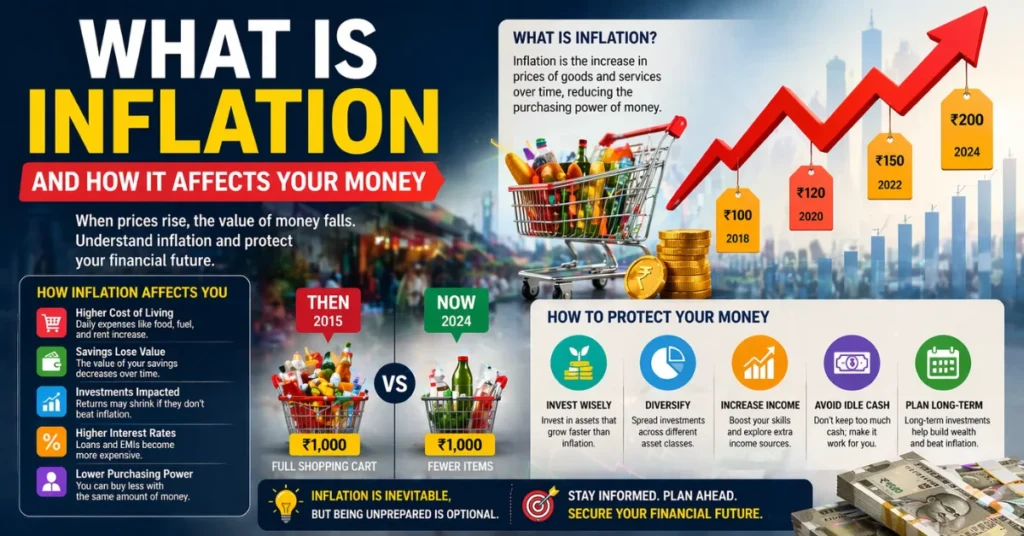
Inflation is something you hear about often—on the news, in financial discussions, or even during everyday conversations about rising prices. But what does it really mean for you? Simply put, inflation affects how far your money can go. The same amount of money that once bought a full basket of groceries may only cover half of it today. Understanding inflation is not just for economists—it’s essential for anyone who wants to protect their savings, plan investments, and maintain financial stability.
What Is Inflation?
Inflation refers to the gradual increase in the prices of goods and services over time. When inflation rises, the purchasing power of money decreases. This means you need more money to buy the same items you could previously afford at a lower price.
For example, if a cup of coffee cost ₹50 last year and ₹55 this year, that increase reflects inflation. While a small rise may not seem significant, over time, inflation can have a major impact on your finances.
Types of Inflation
Understanding the different types of inflation helps you see how it affects the economy and your money.
1. Demand-Pull Inflation
This occurs when demand for goods and services exceeds supply. When people have more money to spend, businesses raise prices.
2. Cost-Push Inflation
When the cost of production (like raw materials or wages) increases, companies pass those costs to consumers in the form of higher prices.
3. Built-In Inflation
This happens when workers demand higher wages, and businesses increase prices to cover those wages, creating a cycle.
What Causes Inflation?
Several factors contribute to rising inflation:
- Increased Money Supply: When more money is printed or circulated, it reduces the value of each unit.
- Higher Demand: Economic growth can lead to increased consumer spending.
- Supply Chain Disruptions: Shortages of goods can drive prices up.
- Government Policies: Tax changes or subsidies can influence inflation.
- Global Events: Wars, pandemics, or oil price shocks can impact prices worldwide.
How Inflation Affects Your Money
Inflation doesn’t just impact prices—it directly affects your financial life in multiple ways.
1. Reduced Purchasing Power
The biggest effect of inflation is that your money loses value over time. ₹1,000 today won’t buy the same amount of goods in the future.
2. Savings Lose Value
If your savings are sitting in a low-interest account, inflation can erode their real value. For example, if inflation is 6% and your savings earn 4%, you’re actually losing money.
3. Impact on Investments
Inflation can both hurt and help investments:
- Fixed-income investments like bonds may lose value.
- Stocks and real estate often perform better during inflation.
4. Higher Cost of Living
Daily expenses like food, fuel, and housing become more expensive, affecting your monthly budget.
5. Interest Rates Increase
Central banks often raise interest rates to control inflation, making loans and EMIs more expensive.
Inflation in India: Why It Matters
In a growing economy like India, inflation plays a critical role. Moderate inflation is considered healthy as it indicates economic growth. However, high inflation can reduce consumer spending and slow down the economy.
The Reserve Bank of India monitors inflation closely and adjusts monetary policies to keep it under control. Their goal is to maintain a balance between growth and price stability.
How to Protect Your Money From Inflation
Inflation is unavoidable, but you can take smart steps to minimize its impact.
1. Invest Wisely
Putting your money into assets like stocks, mutual funds, or real estate can help you beat inflation over time.
2. Diversify Your Portfolio
Don’t rely on one type of investment. Spread your money across different assets to reduce risk.
3. Increase Your Income
Look for ways to grow your income—side hustles, freelancing, or skill development.
4. Avoid Idle Cash
Keeping too much cash without earning returns can lead to losses due to inflation.
5. Plan Long-Term
Long-term investments tend to outperform inflation, especially in equity markets.
Inflation vs Deflation
While inflation means rising prices, Deflation is the opposite—falling prices. While lower prices may sound good, deflation can slow down economic growth because people delay spending, expecting prices to drop further.
Real-Life Example of Inflation
Let’s say you had ₹10,000 saved in 2010. Over the years, due to inflation, the value of that money has decreased. What you could buy with ₹10,000 back then may now cost ₹18,000 or more.
This is why simply saving money is not enough—you need to grow it.
Key Inflation Indicators
Economists use various tools to measure inflation:
- Consumer Price Index (CPI) – Tracks changes in prices of everyday goods.
- Wholesale Price Index (WPI) – Measures price changes at the wholesale level.
These indicators help governments and central banks make decisions.
Final Thoughts
Inflation is a silent force that gradually impacts your financial health. While you may not notice it daily, over time, it can significantly reduce your purchasing power and savings value. Understanding how inflation works allows you to make better financial decisions—whether it’s saving, investing, or spending.
The key takeaway? Don’t let your money sit idle. Make it work for you. With the right financial strategies, you can not only protect your wealth from inflation but also grow it over time.
Also read : How to Set Financial Goals Before Investing