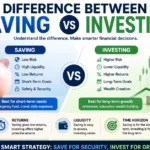


When it comes to building wealth and securing your financial future, understanding the different types of investments is essential. Many people save money, but saving alone often isn’t enough to beat inflation or achieve long-term financial goals. Investing allows your money to grow over time, helping you create wealth, generate passive income, and achieve financial independence. Whether you’re a beginner or someone looking to diversify your portfolio, knowing the various investment options available can help you make smarter financial decisions.
In this guide, we’ll explore the major types of investments—stocks, bonds, real estate, and more—along with their benefits, risks, and how they fit into a well-balanced investment strategy.
What is Investing?
Investing means putting your money into assets with the expectation of generating returns over time. These returns can come in the form of income (like dividends or interest) or capital appreciation (increase in value).
The key goal of investing is to grow your wealth while managing risk effectively.
1. Stocks (Equities)
Stocks are one of the most popular types of investments. When you buy a stock, you purchase a small ownership stake in a company.
How Stocks Work
Companies issue stocks to raise capital. Investors buy these shares, and as the company grows, the value of the stock may increase.
Types of Stocks
- Common Stocks – Provide voting rights and potential dividends
- Preferred Stocks – Offer fixed dividends but limited voting rights
Benefits of Investing in Stocks
- High potential returns
- Ownership in growing companies
- Dividend income
Risks of Stocks
- Market volatility
- Price fluctuations
- Company-specific risks
Best For:
Long-term investors who can tolerate market ups and downs.
2. Bonds (Fixed Income Investments)
Bonds are considered safer than stocks and are often used for steady income.
How Bonds Work
When you buy a bond, you are lending money to a government or corporation. In return, you receive regular interest payments and your principal back at maturity.
Types of Bonds
- Government Bonds
- Corporate Bonds
- Municipal Bonds
Benefits of Bonds
- Stable and predictable income
- Lower risk compared to stocks
- Portfolio diversification
Risks of Bonds
- Interest rate risk
- Inflation risk
- Credit risk (issuer default)
Best For:
Conservative investors looking for stable returns.
3. Real Estate Investment
Real estate is a tangible asset that can generate income and appreciate in value over time.
Ways to Invest in Real Estate
- Residential properties
- Commercial properties
- Rental income
- Real Estate Investment Trusts (REITs)
Benefits of Real Estate
- Passive income through rent
- Property value appreciation
- Hedge against inflation
Risks of Real Estate
- High initial investment
- Liquidity issues
- Maintenance costs
Best For:
Investors looking for long-term wealth and passive income.
4. Mutual Funds
Mutual funds pool money from multiple investors to invest in diversified assets like stocks and bonds.
Types of Mutual Funds
- Equity Funds
- Debt Funds
- Hybrid Funds
Benefits
- Professional management
- Diversification
- Easy to invest
Risks
- Market risk
- Management fees
Best For:
Beginners who want diversification without deep market knowledge.
5. Exchange-Traded Funds (ETFs)
ETFs are similar to mutual funds but trade like stocks on the stock exchange.
Benefits of ETFs
- Lower fees
- Easy buying and selling
- Diversified portfolio
Risks
- Market fluctuations
- Liquidity concerns in some ETFs
Best For:
Investors looking for low-cost diversification.
6. Cryptocurrency Investments
Cryptocurrency has become a popular modern investment option.
Popular Cryptocurrencies
- Bitcoin
- Ethereum
- Altcoins
Benefits
- High return potential
- Decentralized system
- Global accessibility
Risks
- Extreme volatility
- Regulatory uncertainty
- Security risks
Best For:
High-risk investors seeking high rewards.
7. Commodities
Commodities include physical goods like gold, silver, oil, and agricultural products.
Types of Commodities
- Precious metals (Gold, Silver)
- Energy (Oil, Gas)
- Agriculture (Wheat, Coffee)
Benefits
- Inflation hedge
- Portfolio diversification
Risks
- Price volatility
- Market speculation
Best For:
Investors looking to diversify and hedge against inflation.
8. Fixed Deposits (FDs)
Fixed deposits are low-risk investment options offered by banks.
How They Work
You deposit money for a fixed period and earn a guaranteed interest rate.
Benefits
- Safe and secure
- Guaranteed returns
Risks
- Low returns
- Inflation impact
Best For:
Risk-averse investors.
9. Public Provident Fund (PPF)
PPF is a government-backed long-term investment scheme in India.
Benefits
- Tax benefits
- Guaranteed returns
- Long-term wealth creation
Risks
- Lock-in period
- Limited liquidity
Best For:
Long-term, tax-saving investors.
10. Alternative Investments
These include non-traditional investment options.
Examples
- Private equity
- Hedge funds
- Art and collectibles
- Startups
Benefits
- High return potential
- Portfolio diversification
Risks
- High risk
- Low liquidity
Best For:
Experienced investors.
How to Choose the Right Investment
Choosing the right investment depends on several factors:
1. Financial Goals
- Short-term vs long-term goals
- Wealth creation vs income generation
2. Risk Tolerance
- Low risk (FDs, Bonds)
- Medium risk (Mutual Funds, ETFs)
- High risk (Stocks, Crypto)
3. Investment Horizon
- Short-term: Debt funds, FDs
- Long-term: Stocks, Real estate
4. Diversification
Never put all your money in one asset. A diversified portfolio reduces risk.
Importance of Diversification
Diversification means spreading your investments across different asset classes.
Example Portfolio
- 40% Stocks
- 30% Bonds
- 20% Real Estate
- 10% Gold
This helps reduce losses if one investment performs poorly.
Tips for Beginners
- Start early to benefit from compounding
- Invest regularly (SIP method)
- Avoid emotional decisions
- Research before investing
- Focus on long-term growth
Conclusion
Understanding the different types of investments—stocks, bonds, real estate, and more—is the first step toward building a strong financial future. Each investment option comes with its own set of risks and rewards, and the best strategy is to create a balanced and diversified portfolio based on your goals and risk tolerance.
Investing is not about getting rich quickly—it’s about growing your wealth steadily over time. By choosing the right mix of investment options and staying consistent, you can achieve financial security and long-term success.
Also read : Difference Between Saving and Investing: A Complete Guide for Beginners