

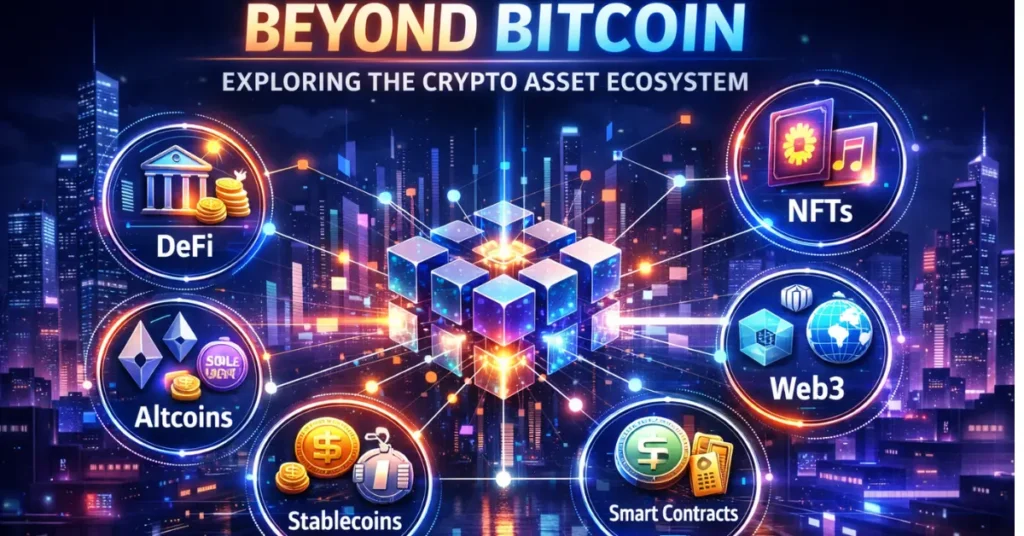
When most people hear the word “crypto,” they instantly think of Bitcoin. It’s the name that made headlines, created overnight millionaires, and introduced the world to blockchain technology. But the crypto world has grown far beyond Bitcoin. Today, there is a vast and fast-evolving crypto asset ecosystem filled with thousands of digital assets, platforms, and use cases that are reshaping finance, technology, gaming, art, and even how we interact online. Understanding this wider ecosystem is important for anyone who wants to truly grasp where the future of money and the internet might be heading. Whether you’re an investor, a tech enthusiast, or just curious, exploring beyond Bitcoin opens the door to a much bigger story.
What Is the Crypto Asset Ecosystem?
The crypto asset ecosystem refers to the full range of digital assets, blockchain networks, platforms, and applications built on decentralized technologies. Bitcoin was the first successful cryptocurrency, designed mainly as a peer-to-peer digital currency and store of value. However, over time, developers and entrepreneurs realized that blockchain could be used for much more than simple payments.
Today’s crypto ecosystem includes:
- Cryptocurrencies (like Bitcoin, Ethereum, Solana, and Litecoin)
- Smart contract platforms
- Decentralized finance (DeFi) applications
- Non-fungible tokens (NFTs)
- Stablecoins
- Web3 platforms and decentralized applications (dApps)
- Layer 2 scaling solutions and blockchain infrastructure projects
Together, these elements form a complex but exciting digital economy that operates on decentralized networks rather than traditional centralized institutions.
Beyond Bitcoin: Key Types of Crypto Assets
1. Altcoins: More Than Just “Alternative Coins”
Altcoins are cryptocurrencies other than Bitcoin. Some focus on faster transactions, lower fees, or better scalability. Others aim to support smart contracts and decentralized applications.
Popular altcoins include:
- Ethereum (ETH): The leading smart contract platform, powering DeFi, NFTs, and thousands of dApps.
- Solana (SOL): Known for high-speed transactions and low costs.
- Cardano (ADA): Focuses on research-driven development and scalability.
- Polygon (MATIC): A Layer 2 solution designed to improve Ethereum’s speed and reduce fees.
Altcoins play a major role in expanding what blockchain technology can do beyond simple value transfer.
2. Stablecoins: Bridging Crypto and Traditional Finance
Stablecoins are cryptocurrencies designed to maintain a stable value, usually pegged to a fiat currency like the US dollar. Examples include USDT (Tether), USDC, and DAI. They are widely used in crypto trading, DeFi platforms, and cross-border payments.
Stablecoins help reduce the volatility commonly associated with crypto markets. They make it easier for users to move money on blockchain networks without worrying about sudden price swings.
3. Utility Tokens and Governance Tokens
Many blockchain projects issue tokens that have specific uses within their ecosystems. Utility tokens may be used to pay transaction fees, access services, or participate in network activities. Governance tokens allow holders to vote on proposals and decisions related to the future of a decentralized platform.
This model supports the idea of community-driven development, where users have a direct role in shaping how platforms evolve.
The Rise of Smart Contracts and DeFi
One of the biggest shifts in the crypto asset ecosystem came with the introduction of smart contracts. These are self-executing programs stored on the blockchain that run when certain conditions are met. Smart contracts remove the need for middlemen in many transactions.
What Is DeFi?
Decentralized finance (DeFi) refers to financial services built on blockchain networks. These services include:
- Lending and borrowing platforms
- Decentralized exchanges (DEXs)
- Yield farming and staking
- Liquidity pools
- Synthetic assets and derivatives
DeFi aims to create an open, permissionless financial system where anyone with an internet connection can access financial tools without relying on traditional banks or intermediaries. This is especially meaningful in regions where access to banking services is limited.
NFTs and the Digital Ownership Revolution
Non-fungible tokens (NFTs) represent unique digital assets that prove ownership of digital or real-world items. Unlike cryptocurrencies, NFTs are not interchangeable. Each NFT has unique data stored on the blockchain.
NFTs have been used for:
- Digital art and collectibles
- Music and entertainment
- Gaming assets and virtual land
- Identity and digital credentials
While NFTs became famous for high-profile art sales, their long-term value may lie in digital ownership, creator royalties, and new business models for content creators.
Web3 and Decentralized Applications (dApps)
Web3 is the idea of a new, decentralized version of the internet built on blockchain technology. Instead of relying on centralized platforms that control user data, Web3 aims to give users ownership of their digital identity and assets.
Decentralized applications (dApps) run on blockchain networks and are not controlled by a single company. Examples include:
- Decentralized exchanges
- Blockchain-based games
- Decentralized social media platforms
- NFT marketplaces
Web3 promises more transparency, user control, and resistance to censorship, though it still faces challenges around user experience and scalability.
Blockchain Infrastructure and Layer 2 Solutions
As blockchain adoption grows, scalability becomes a key challenge. Popular networks like Ethereum have faced high transaction fees and network congestion. This has led to the development of Layer 2 solutions and blockchain infrastructure projects.
Layer 2 networks process transactions off the main blockchain while still benefiting from its security. Examples include:
- Optimistic rollups
- Zero-knowledge rollups (zk-rollups)
- Sidechains
These technologies aim to make blockchain networks faster, cheaper, and more accessible for everyday users.
Real-World Use Cases of the Crypto Ecosystem
The crypto asset ecosystem is not just about trading and speculation. It is being used in real-world scenarios such as:
- Cross-border payments: Faster and cheaper international money transfers
- Remittances: Helping people send money home with lower fees
- Supply chain tracking: Transparent tracking of goods
- Tokenization of real-world assets: Real estate, commodities, and stocks on blockchain
- Digital identity: Secure and user-owned identity systems
As adoption grows, more industries are experimenting with blockchain-based solutions to improve efficiency and transparency.
Risks and Challenges in the Crypto Asset Ecosystem
While the opportunities are exciting, the crypto ecosystem also comes with risks:
- Market volatility: Prices can change rapidly.
- Regulatory uncertainty: Crypto regulations vary by country and are still evolving.
- Security risks: Hacks, scams, and phishing attacks remain a concern.
- Technical complexity: New users may find blockchain technology difficult to understand.
It’s important for users and investors to do proper research, understand the technology, and manage risk responsibly.
The Future of Crypto Beyond Bitcoin
The future of the crypto asset ecosystem looks broader than ever. Innovations in blockchain scalability, decentralized finance, Web3, and digital identity are pushing the space beyond simple cryptocurrencies. Governments and institutions are also exploring central bank digital currencies (CBDCs) and regulated crypto products.
As the technology matures, we may see more seamless integration between traditional finance and decentralized systems. Crypto assets could become part of everyday financial life, powering everything from online payments to digital ownership and decentralized applications.
Final Thoughts
Bitcoin started the crypto revolution, but it is only the beginning of a much larger story. The crypto asset ecosystem now includes a wide range of digital assets, platforms, and technologies that are transforming how value is created, transferred, and managed in the digital age. By looking beyond Bitcoin, you gain a deeper understanding of the opportunities and challenges shaping the future of finance and the internet.
For beginners, the key is to learn step by step—understand the basics of blockchain, explore different types of crypto assets, and stay informed about trends in DeFi, NFTs, and Web3. The crypto world is evolving fast, and those who take the time to understand the full ecosystem will be better prepared to navigate what comes next.
Also read: Understanding Blockchain: The Technology Behind Crypto