

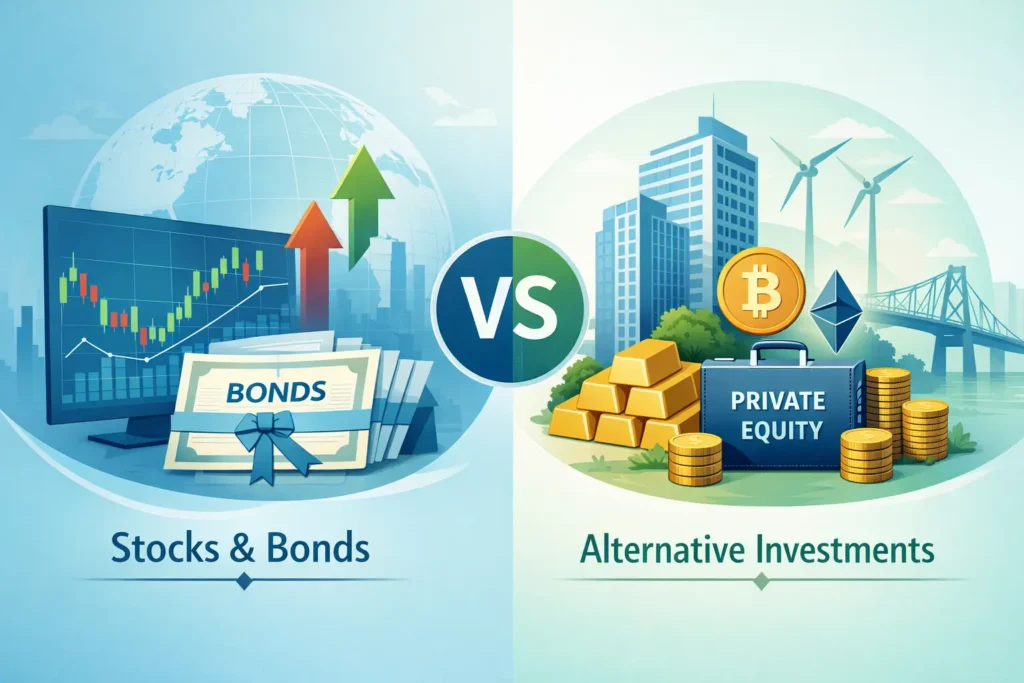
How Alternative Investments Compare to Stocks and Bonds:Investing is no longer limited to just stocks and bonds. As markets become more volatile and investors look for better diversification, alternative investments are gaining attention. From real estate and commodities to private equity and cryptocurrencies, these non-traditional assets are reshaping how people build wealth. Understanding how alternative investments compare to traditional assets like stocks and bonds is important for anyone who wants to make smarter, more balanced financial decisions.
In this article, we will clearly explain what alternative investments are, how they differ from stocks and bonds, their risks and returns, and whether they are suitable for different types of investors. This guide is written in simple, easy-to-understand language to help both beginners and experienced investors.
What Are Alternative Investments?
Alternative investments are financial assets that fall outside traditional investment categories such as stocks, bonds, and cash. Common examples include:
- Real estate
- Commodities (gold, silver, oil)
- Private equity
- Hedge funds
- Venture capital
- Cryptocurrencies
- Collectibles (art, antiques, wine)
- Infrastructure investments
These assets are often less regulated and may behave differently from stock and bond markets, making them attractive for diversification.
Understanding Stocks and Bonds
Before comparing, it’s important to understand traditional investments.
Stocks
Stocks represent ownership in a company. When you buy shares, you become a partial owner and may benefit from:
- Capital appreciation
- Dividends
- Voting rights
However, stocks are volatile and highly sensitive to market conditions, economic news, and company performance.
Bonds
Bonds are fixed-income investments where you lend money to a government or company in exchange for regular interest payments. Bonds are generally:
- More stable than stocks
- Lower risk
- Lower return
They are often used to preserve capital and generate predictable income.
Key Differences Between Alternative Investments, Stocks, and Bonds
1. Risk and Return Potential
- Stocks: High return potential but higher volatility
- Bonds: Lower risk with stable but modest returns
- Alternative investments: Can offer high returns, but risks vary widely depending on the asset
Some alternatives like real estate can be relatively stable, while others like cryptocurrencies are highly volatile.
2. Diversification Benefits
One of the biggest advantages of alternative investments is diversification.
- Stocks and bonds often move together during economic stress
- Alternative assets may have low correlation with traditional markets
For example, gold often performs well during inflation or market downturns, while real estate can provide stable income even when stock markets fluctuate.
3. Liquidity
Liquidity refers to how easily an asset can be bought or sold.
- Stocks: Highly liquid, traded daily on exchanges
- Bonds: Generally liquid, especially government bonds
- Alternative investments: Often illiquid
Real estate, private equity, and collectibles may take months or years to sell, making them less suitable for investors who need quick access to cash.
4. Transparency and Regulation
- Stocks and bonds are heavily regulated and transparent
- Alternative investments are less regulated
Private equity and hedge funds often provide limited public information, requiring investors to do more research and due diligence.
5. Investment Horizon
- Stocks: Medium to long-term
- Bonds: Short to medium-term
- Alternative investments: Usually long-term
Many alternative assets require a longer holding period to realize full returns.
Performance During Market Volatility
Traditional assets like stocks can suffer during market crashes. Bonds may offer some protection, but low interest rates reduce their effectiveness.
Alternative investments can:
- Act as a hedge against inflation
- Protect against market downturns
- Reduce overall portfolio volatility
For example:
- Gold often rises during economic uncertainty
- Real estate provides rental income even during slow markets
- Infrastructure investments offer stable cash flows
However, performance depends on market conditions and asset selection.
Income Generation Comparison
- Stocks: Dividends (not guaranteed)
- Bonds: Fixed interest payments
- Alternative investments: Rental income, royalties, profit sharing
Real estate and infrastructure investments are particularly popular for generating passive income.
Accessibility for Retail Investors
Historically, alternative investments were only available to high-net-worth individuals. Today, access is improving:
- Real estate investment trusts (REITs)
- Commodity ETFs
- Crypto exchanges
- Crowdfunding platforms
Still, some alternatives like private equity and hedge funds require high minimum investments.
Costs and Fees
- Stocks and bonds typically have low fees
- Alternative investments often involve higher costs
Examples include:
- Management fees
- Performance fees
- Maintenance and storage costs
Higher fees can impact net returns, so investors must understand the cost structure.
Tax Considerations
Tax treatment varies across investment types:
- Stocks: Capital gains tax and dividend tax
- Bonds: Interest income taxed as regular income
- Alternative investments: Complex tax rules
Real estate offers tax benefits like depreciation, while cryptocurrency taxation depends on holding period and local regulations.
Who Should Consider Alternative Investments?
Alternative investments are suitable for:
- Investors seeking diversification
- Those with long-term investment goals
- Investors comfortable with higher risk
- People looking for inflation protection
They may not be ideal for:
- Short-term investors
- Those needing high liquidity
- Beginners without financial guidance
Building a Balanced Portfolio
A balanced investment portfolio often includes:
- Stocks for growth
- Bonds for stability
- Alternative investments for diversification
The right mix depends on:
- Risk tolerance
- Investment goals
- Time horizon
Financial advisors often recommend allocating 10–30% of a portfolio to alternative assets, depending on individual circumstances.
Advantages and Disadvantages at a Glance
Advantages of Alternative Investments
- Portfolio diversification
- Inflation hedge
- Potential for higher returns
- Lower correlation with stock markets
Disadvantages
- Illiquidity
- Higher fees
- Limited transparency
- Complex tax treatment
Final Thoughts
When comparing alternative investments vs stocks and bonds, there is no one-size-fits-all answer. Stocks and bonds remain the foundation of most portfolios due to their liquidity, transparency, and long-term reliability. However, alternative investments can play a powerful supporting role by reducing risk and enhancing returns.
For investors willing to take a long-term approach and understand the risks, alternative assets offer unique opportunities that traditional investments may not provide. The key is balance, research, and aligning investments with your financial goals.
By understanding how alternative investments compare to stocks and bonds, you can make more informed decisions and build a resilient, diversified investment portfolio that stands strong in changing market conditions.
Also read: Risk and Reward: Understanding the Alternative Investment Landscape