

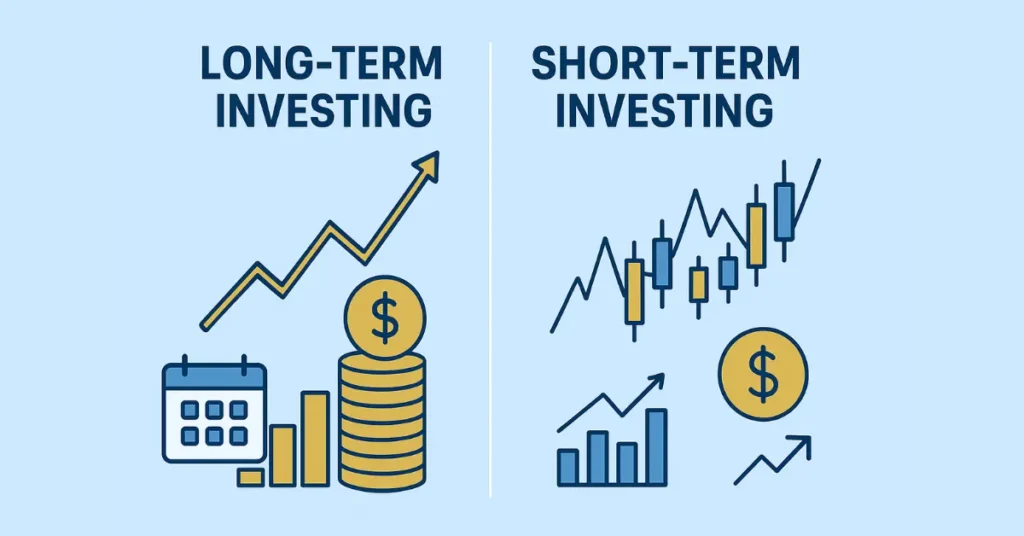
Long-Term vs Short-Term Investing:Investing is one of the most powerful habits for building wealth, yet many people struggle because they don’t know how to invest their money. Should you focus on long-term investments and wait patiently for years? Or should you adopt a short-term investing or trading approach for faster results? The truth is—both strategies can work, and the real power lies in understanding how to balance them. In today’s fast-paced financial world, knowing the difference between long-term vs. short-term investing is essential for reducing risk, growing your portfolio, and making smarter money decisions. This guide will help you understand both approaches, their benefits, risks, and how to find the right balance for your financial goals.
What Is Long-Term Investing?
Long-term investing means holding an investment for several years or even decades. This approach is built on patience, consistent investing, and the power of compounding. Whether you’re investing in stocks, mutual funds, index funds, real estate, or retirement plans, the idea is to let your money grow slowly and steadily.
Benefits of Long-Term Investing
- Compounding Growth
Your money grows faster over time as returns generate additional returns. - Lower Risk Over Time
Market ups and downs become less impactful when you stay invested for many years. - Less Stress and Fewer Decisions
You don’t need to track the market daily. - Tax Benefits
Many countries offer lower long-term capital gains tax. - Ideal for Wealth Building
Perfect for goals like retirement, buying a house, or children’s education.
Popular Long-Term Investments
- Equity mutual funds
- Index funds
- Exchange-traded funds (ETFs)
- Retirement accounts
- Real estate
- Blue-chip stocks
What Is Short-Term Investing?
Short-term investing involves buying and selling assets within a shorter period—days, weeks, or months. The goal is to take advantage of market movements to earn quicker profits. This includes day trading, swing trading, investing in short-term bonds, or parking money in high-interest savings.
Benefits of Short-Term Investing
- Quick Returns
Profit can come faster than long-term investing. - Flexibility
Easy to change strategies based on market trends. - Good for Extra Cash Flow
Useful when you need money more frequently. - Capitalizing on Market Volatility
Market swings can offer profitable opportunities.
Popular Short-Term Investments
- Short-term bonds
- Treasury bills
- Money market funds
- Swing trading
- Day trading
- High-yield savings accounts
Long-Term vs. Short-Term Investing: Key Differences
Understanding the difference between long-term and short-term investing helps you choose what fits your goals. Here’s a simplified breakdown:
| Factor | Long-Term Investing | Short-Term Investing |
|---|---|---|
| Time Horizon | 5+ years | Few days to months |
| Risk Level | Lower over time | Higher due to volatility |
| Return Type | Steady, compounding | Quick but unpredictable |
| Effort Required | Low | High |
| Best For | Wealth building | Opportunities & cash flow |
Risks of Long-Term vs. Short-Term Investing
Every investment strategy has risks—knowing them helps you make smarter decisions.
Risks of Long-Term Investing
- Market crashes can delay returns
- Requires patience
- Not ideal for short-term financial needs
- Returns take time to build
Risks of Short-Term Investing
- Higher volatility
- Requires constant monitoring
- Higher transaction costs
- Emotional decision-making
- Greater chances of loss due to fast moves
Which Strategy Is Better: Long-Term or Short-Term?
There is no one-size-fits-all answer. The right strategy depends on your:
- Financial goals
- Risk tolerance
- Investment timeline
- Income stability
- Market knowledge
- Patience level
Long-term investing is better for building steady, sustainable wealth.
Short-term investing is better for taking advantage of market movements and generating extra profits.
But the real secret is: Combining both strategies for the right balance.
How to Balance Long-Term and Short-Term Investing
Finding the right balance between long-term and short-term investing can help you grow wealth while still enjoying liquidity and flexibility.
1. Define Your Financial Goals
Break your goals into:
- Short-term goals (under 3 years): vacation, emergency fund
- Medium-term goals (3–5 years): buying a vehicle
- Long-term goals (5+ years): retirement, house purchase
This helps you allocate investments properly.
2. Diversify Your Portfolio
Diversification reduces risk by spreading your money across:
- Stocks
- Bonds
- Mutual funds
- Real estate
- Precious metals
- Cash assets
A mix of long-term and short-term investments ensures stability and growth.
3. Follow the 70/30 or 60/40 Rule
Many financial planners suggest:
- 70–80% long-term investments
- 20–30% short-term investments
This gives you long-term growth with short-term flexibility.
4. Keep an Emergency Fund
Short-term investments like money market funds or savings accounts help you handle emergencies without touching long-term assets.
5. Use Systematic Investment Plans (SIPs)
SIPs help build long-term wealth while reducing market-timing risk.
6. Avoid Emotional Decisions
Short-term investing can be emotional. Use data, trends, and disciplined strategies instead.
7. Review Your Portfolio Regularly
Market conditions change. Reviewing your portfolio every 6–12 months helps you stay aligned with your goals.
Examples of Balancing Both Strategies
Example 1: A Working Professional
- 70% in long-term mutual funds
- 20% in short-term debt funds
- 10% in swing trading stocks
Example 2: A Business Owner
- 60% in long-term real estate & index funds
- 30% in short-term investments for liquidity
- 10% in gold or silver
Example 3: A Student
- 80% long-term (index funds/SIPs)
- 20% short-term (savings or treasury bills)
Why Balancing Both Approaches Works
Balanced investing works because it gives you:
- Stable, long-term wealth creation
- Short-term financial security
- Reduced emotional stress
- Lower risk through diversification
- More opportunities during market swings
When long-term investments grow steadily and short-term ones provide liquidity, you get the best of both worlds.
SEO Keywords Included Naturally
Here are some keywords naturally integrated into the blog:
- long-term vs short-term investing
- long-term investing
- short-term investing
- investment strategy
- long-term wealth building
- short-term trading
- investment risks
- financial goals
- portfolio diversification
- long-term investment returns
Conclusion
Understanding long-term vs. short-term investing is essential for anyone who wants to grow wealth smartly. Long-term investing gives you stability, compounding benefits, and lower risks over time, while short-term investing helps you grab quick opportunities and maintain liquidity. The right balance depends on your goals, risk appetite, and financial situation. When you combine both approaches, you build a stronger, more flexible portfolio that supports your future dreams while meeting your present needs.
Also read: How to Choose Between Mutual Funds, ETFs, and Direct Investing