
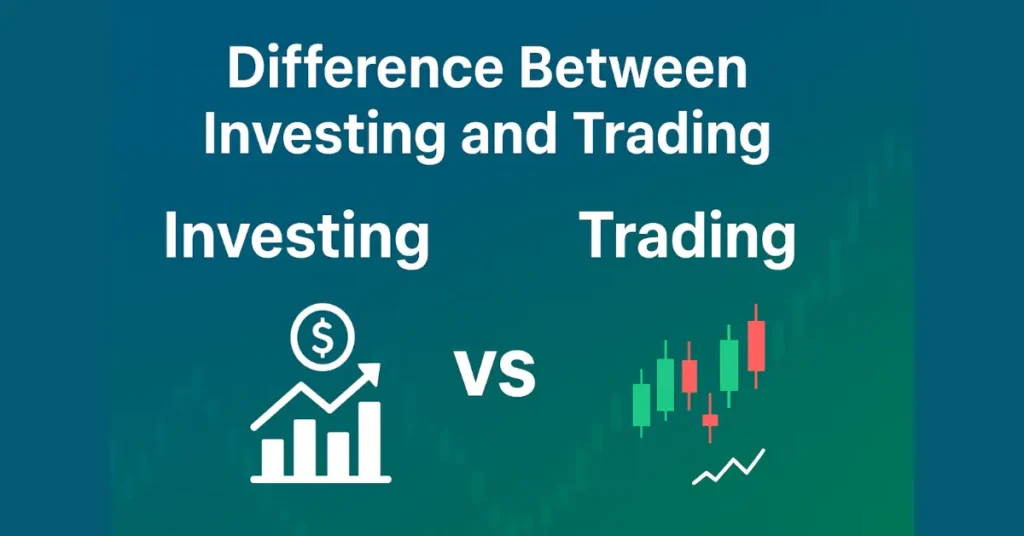
Difference Between Investing and Trading: Understanding money is the first step toward building real financial freedom, yet one of the most common confusions for beginners is the difference between investing and trading. Although many people use these terms interchangeably, they represent two completely different approaches to the financial markets. Knowing this distinction helps you protect your hard-earned money, choose the right strategy, and achieve your long-term financial goals with confidence.
If you’re just starting your journey in the stock market, crypto market, or any other asset class, understanding how investing works, how trading works, and which approach fits your personality is essential. This guide will help you understand both, compare them side-by-side, and pick the right path for yourself.
What Is Investing?
Investing is the process of buying assets with the expectation that their value will increase over time. It is a long-term approach focused on wealth creation. The goal is not quick profit but steady growth.
Key features of investing:
- Long-term mindset (years or decades)
- Lower risk compared to active trading
- Focus on fundamental analysis
- Compounding returns
- Ideal for goals like retirement, education, or long-term wealth creation
Investors typically put money into:
- Stocks
- Mutual funds
- ETFs
- Bonds
- Real estate
- Gold
- Crypto (as long-term holdings)
Investing works best for people who want stable growth, don’t want to monitor markets daily, and prefer a more predictable financial strategy.
What Is Trading?
Trading refers to buying and selling assets frequently to make profit from short-term price movements. Traders look to capitalize on volatility—small price changes happening daily, hourly, or even by the minute.
Key features of trading:
- Short-term approach (minutes, hours, days, or months)
- Higher risk and higher reward
- Technical analysis focused
- Requires constant monitoring
- Depends heavily on market timing
Trading includes:
- Day trading
- Swing trading
- Scalping
- Position trading
- Futures & options trading
- Crypto trading
Traders rely on charts, indicators, price trends, and market news to make quick decisions.
Investing vs Trading: What’s the Main Difference?
The biggest difference between investing and trading is time horizon and risk tolerance.
1. Time Horizon
- Investing: Long-term (years)
- Trading: Short-term (days or hours)
Investors focus on gradual growth, while traders aim for quick gains.
2. Risk Level
- Investing: Lower risk (but requires patience)
- Trading: Higher risk (but potential for fast returns)
Trading is more volatile due to frequent buying and selling.
3. Strategy
- Investing: Buy and hold
- Trading: Buy and sell often
Investors trust long-term fundamentals. Traders trust short-term price movements.
4. Skills Required
- Investing: Basic financial knowledge, patience
- Trading: Advanced chart reading, market analysis, emotional control
5. Income Type
- Investing: Passive income
- Trading: Active income
6. Tools Used
- Investors rely on annual reports, company fundamentals, and long-term trends.
- Traders use candlestick charts, RSI, MACD, moving averages, and price action techniques.
Which Is More Profitable: Investing or Trading?
Both can be profitable, but it depends on the individual.
Investing is more profitable for:
- Beginners
- Busy professionals
- Risk-averse people
- Long-term wealth builders
Trading is more profitable for:
- People who can dedicate time daily
- Those with strong technical skills
- Risk-takers
- People who love fast-paced decision-making
Long-term data shows that investors generally make more stable, predictable returns, while traders have higher income potential but also face higher losses.
Pros and Cons of Investing
✔ Pros:
- Low stress
- Long-term wealth creation
- Lower risk
- Compounding benefits
- No need for constant market watchdogging
✘ Cons:
- Slow growth
- Requires patience
- Returns are not immediate
Pros and Cons of Trading
✔ Pros:
- Quick profits possible
- Exciting and dynamic
- Opportunity to make money daily
- Works well in volatile markets
✘ Cons:
- High risk
- Emotional pressure
- Requires constant market analysis
- Can lead to major losses without discipline
Investing vs Trading: Which Should You Choose?
Your choice depends on your personality, goals, time availability, and risk appetite.
Choose Investing if:
- You want long-term financial security
- You don’t want to watch charts daily
- You prefer steady, safe growth
- You’re saving for future goals
Choose Trading if:
- You can handle high risk
- You enjoy fast-paced decision making
- You want to profit from market volatility
- You can monitor markets regularly
You can also do both. Many people invest for long-term goals and trade for extra profits.
Common Myths About Investing and Trading
Myth 1: Trading = Guaranteed Fast Money
Fact: Trading without strategy leads to losses. It requires skill and discipline.
Myth 2: Investing Is Only for the Rich
Fact: Anyone can start investing with small amounts.
Myth 3: Long-Term Investing Is Too Slow
Fact: Compounding makes long-term investing powerful.
Myth 4: Trading Is Gambling
Fact: Trading becomes gambling only when done without analysis.
Tips for Beginners
If you want to start investing:
- Begin with SIPs or index funds
- Learn basic financial concepts
- Stay consistent
- Avoid panic selling
If you want to start trading:
- Learn technical analysis
- Practice with demo accounts
- Use stop-loss
- Start small
- Avoid emotional decisions
Final Thoughts
Understanding the difference between investing and trading is the foundation of smart financial decision-making. Both offer unique advantages, but they suit different types of people and financial goals.
Investing helps you build long-term wealth with stability, while trading offers fast-paced opportunities for quick gains—if done with discipline and knowledge.
Instead of choosing one over the other, you can mix both strategies. Invest for the future, and trade for additional income. The key is understanding your risk tolerance and choosing the strategy that matches your lifestyle.
By knowing what separates investing from trading, you gain the clarity to manage money wisely and build a stronger financial future.
Also read: Common Investing Mistakes New Investors Make — and How to Avoid Them